



TL;DR
Gladly is a powerful customer service platform, particularly for large consumer brands that need seamless omnichannel support and AI-powered customer conversations. However, its quote-based pricing, lack of public pricing transparency, and enterprise buying model lead many organizations to explore Gladly alternatives before making a long-term commitment. This guide compares 12 of the best options, starting with BlueTweak, a single-platform customer support solution that includes AI assist by default, supports multiple brands in one instance, and gives you complete control over how quickly you adopt customer-facing AI.
Gladly has earned a strong reputation for bringing every customer interaction into one continuous conversation, making it a popular choice for brands that prioritise personalised customer experiences. But for many organizations, the buying experience itself becomes the first obstacle. With no public pricing and a sales-led purchasing process, it's difficult to understand whether Gladly fits your budget before speaking with a sales representative.
That's why many support leaders start comparing alternatives. They want transparent pricing, predictable AI costs, and a platform that doesn't force them into an enterprise buying model before they're ready. BlueTweak is one platform worth considering. Rather than asking you to hand customer support over to AI from day one, BlueTweak gives you a single operational system where AI can assist agents behind the scenes, support customers directly when you're ready, and expand its role as your confidence grows. For teams looking to balance innovation with control, that makes it a compelling alternative to Gladly.
Why Customer Support Teams Are Rethinking Enterprise Platforms
Choosing a customer support platform is no longer just about adding more channels or adopting the latest AI features. Support leaders are under growing pressure to improve customer experiences while keeping costs predictable, simplifying operations, and introducing AI without risking customer trust.
That shift is reflected across the industry. According to PwC's 2025 Customer Experience Survey, 70% of business leaders believe customer expectations are evolving faster than their organizations can adapt. Rather than investing in more disconnected tools, many organizations are looking for platforms that bring customer conversations, AI, knowledge, analytics, and reporting together in one operational system.
That's one reason more teams are looking beyond traditional enterprise buying models. Instead of comparing feature lists alone, they're asking practical questions:
- How predictable are our costs as we grow?
- Can we introduce AI gradually rather than all at once?
- Will reporting work across every channel?
- Can we support multiple brands without adding another platform?
- Will this reduce operational complexity or create more of it?
These are exactly the questions driving many organizations to evaluate Gladly alternatives. While Gladly remains a strong option for large customer service operations, many growing organizations are prioritising transparency, flexibility, and a platform that lets them adopt AI at their own pace rather than committing to an enterprise-first model from day one.
Gladly Alternatives at a Glance
Every platform in this guide takes a slightly different approach to customer support. Some prioritise low-cost entry plans, while others focus on ecommerce, CRM integration, or enterprise-scale contact centres. BlueTweak stands out by combining omnichannel support, AI assist, and analytics within one operational system, giving organizations the flexibility to adopt AI at their own pace without adding complexity or unpredictable costs.
If you're shortlisting platforms, the comparison below provides a quick overview before we explore each option in more detail.
| Platform | Starting price | AI included in base price? | Omnichannel | Multi-brand | Best for |
|---|---|---|---|---|---|
| BlueTweak | €65/agent/month | Yes | Voice, email, chat, social | Yes | Organizations wanting one operational system with AI included |
| Zendesk | From $19/agent/month | Partial (higher tiers) | Yes | Limited | Organizations needing the largest integration marketplace |
| Freshdesk | From $15/agent/month | Limited | Yes | Limited | Budget-conscious teams |
| Kustomer | Custom | Yes | Yes | Limited | E-commerce brands |
| HubSpot Service Hub | Free; from $10 per agent/month | Partial | Limited | Limited | Existing HubSpot customers |
| Gorgias | From $40 per agent/month | Limited | E-commerce channels | Limited | Shopify-first retailers |
| Intercom | From $29 per agent/month | Yes | Chat-focused | Limited | SaaS businesses |
| LiveAgent | From $10 per agent/month | Limited | Yes | Limited | Cost-conscious support teams |
| Help Scout | Free; $25 per agent/month | Limited | Email, chat | Limited | Smaller customer support teams |
| Genesys Cloud CX | From $75 per user/month | Yes | Yes | Yes | Large enterprise contact centres |
| Front | From $25/seat/month | Limited | Email-first | Limited | Collaborative support teams |
| Zoho Desk | Free; paid from $7/agent/month | Limited | Yes | Limited | Cost-sensitive businesses |
Whether you're looking for more transparent pricing, stronger AI capabilities, better omnichannel support, or a platform that can support multiple brands from a single instance, there's no single "best" Gladly alternative for every organization. The right choice depends on your support operation today, and how you expect it to evolve over the coming years.
Below, we'll take a closer look at each platform, starting with BlueTweak and the features that make it one of the strongest alternatives for organizations looking to simplify operations while adopting AI with confidence.
If you're comparing customer support platforms, seeing how they work with your own workflows is often more valuable than comparing feature lists.
Start a free 14-day BlueTweak trial to explore the platform firsthand, or book a personalised demo to see how a single operational system can simplify support across every channel.
The 12 Best Gladly Alternatives in 2026
The comparison table provides a useful snapshot, but choosing the right platform requires looking beyond pricing and feature checklists. Every customer support platform takes a different approach to AI, omnichannel communication, reporting, and scalability, so the best choice depends on your team's operational complexity, growth plans, and customer experience goals.
Below, we've taken a closer look at each platform, highlighting where it excels, who it's best suited to, and the potential trade-offs to consider before making your decision.
1. BlueTweak: Best for Transparent AI Adoption at Scale

BlueTweak is more than a traditional help desk. It combines omnichannel customer support, AI-powered assistance, workforce management, quality assurance, analytics, and a centralized knowledge base within one operational system. Instead of stitching together multiple tools or paying for separate AI add-ons, support teams can manage every customer interaction from a single platform while deciding exactly how and when AI becomes part of the customer experience.
That makes BlueTweak particularly compelling for organizations considering alternatives to Gladly. While Gladly delivers a premium customer experience, its quote-based pricing and enterprise buying model can make it difficult for growing organizations to predict costs or evaluate the platform before engaging with sales. BlueTweak takes a different approach by offering transparent pricing, AI features included as standard, and a platform that grows with the maturity of your support operation rather than your headcount.
Rather than pushing organizations towards fully autonomous AI from day one, BlueTweak helps teams build confidence gradually. You can begin with AI-powered summarisation, sentiment analysis, knowledge surfacing, translation, and proposed replies that keep agents in control. As your knowledge base matures and your confidence grows, you can expand AI into more customer-facing conversations, always within the guardrails you define.
Another key differentiator is BlueTweak's ability to support multiple brands and departments from a single instance. Instead of maintaining separate environments, reporting structures, and knowledge bases, organizations can manage every brand from one operational system while keeping data, workflows, and reporting appropriately separated. For businesses operating across multiple markets or managing multilingual support, this significantly reduces operational complexity.
Best For
Organizations looking for one operational system with transparent pricing and a controlled path to AI adoption.
Key Features
- One operational system for voice, email, live chat, social messaging, QA, workforce management, analytics, and knowledge management
- AI assist features included, including summarisation, proposed replies, sentiment analysis, translation, and contextual knowledge surfacing
- Omnichannel customer support with voice, email, live chat, and social messaging
- Centralised knowledge base powering both agents and AI
- Multi-brand and multi-department support from a single instance
- Real-time analytics and reporting across every customer interaction
- Support for 100+ translation languages and conversational voice AI across 30+ languages
Pricing
BlueTweak currently offers transparent, publicly available pricing at €65 per agent, per month, making it much easier to estimate operational costs than platforms relying on custom enterprise quotes. Rather than piecing together multiple software licences and AI add-ons, organizations can evaluate a complete customer support platform with predictable pricing from the outset.
Want to understand the potential return before switching? Use BlueTweak's ROI Calculator to estimate how much time and money your support operation could save before booking a demo.
“The biggest mistake organizations make with AI is trying to automate everything at once. The best outcomes come from building trust gradually; starting with AI that supports your agents, then expanding customer-facing automation only when you're confident it's delivering the right experience. That's the philosophy we've built BlueTweak around.” — Radu Dumitrescu, Head of Presales & Digital Transformation at BlueTweak
BlueTweak in Action
When global outsourcing provider Conectys adopted BlueTweak, the results went well beyond replacing a customer support platform. By giving agents better tools and bringing customer support operations into one operational system, the company achieved a 20% reduction in operational costs, a 35% improvement in customer satisfaction scores, and a 25% reduction in resolution times. The business also reduced data retrieval time by 30% and increased reporting efficiency by 40%, showing how consolidating customer support workflows can improve both customer experience and operational performance.
Pros
- AI assist included without requiring multiple add-on modules
- Transparent pricing
- One operational system instead of multiple disconnected tools
- Multi-brand support within a single instance
- Omnichannel voice, email, chat, and social support
- Strong multilingual capabilities
Cons
- Some advanced autonomous AI capabilities remain in phased rollout
- Smaller integration ecosystem than long-established enterprise vendors
Ready to see how BlueTweak compares with Gladly using your own support workflows? Start your free 14-day trial today or book a personalized demo to explore how one operational system can simplify customer support while giving you complete control over AI adoption.
2. Zendesk: Best for Large Enterprise Support Ecosystems

Zendesk remains one of the biggest names in customer support software, offering ticketing, omnichannel support, AI capabilities, workforce engagement, and one of the largest integration marketplaces available. Its flexibility makes it suitable for organizations with complex support environments and existing software investments.
However, many organizations begin looking for Zendesk alternatives because overall costs can increase significantly as additional AI features, workforce management, quality assurance, and advanced reporting are added through separate modules. For teams prioritising predictable pricing and a simpler operational model, this growing software stack can become difficult to manage.
Key Features
- Omnichannel ticketing
- AI-powered customer support
- Extensive marketplace of integrations
- Workforce engagement management
- Advanced reporting and analytics
Pricing
Plans start from $19 per agent/month, with higher-tier plans unlocking additional AI, reporting, and automation capabilities. Some advanced AI features require additional paid products.
Pros
- Huge integration marketplace
- Mature enterprise platform
- Strong automation capabilities
Cons
- AI and advanced functionality often require paid add-ons
- Total costs can increase as more modules are added
3. Freshdesk: Best for Cost-Conscious Growing Support Teams
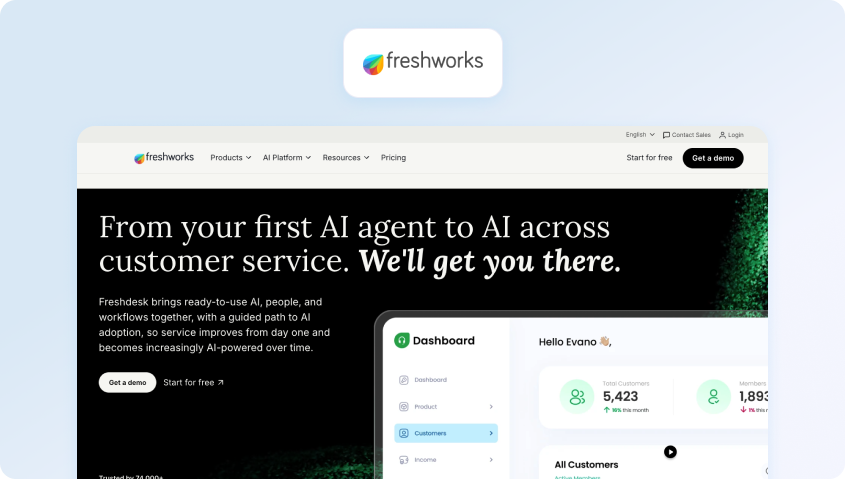
Freshdesk has long been a popular choice for organizations seeking affordable customer support software with a generous free plan and straightforward deployment. It combines ticketing, live chat, knowledge management, automation, and AI capabilities in an intuitive interface that appeals to smaller support teams.
Compared with Gladly, Freshdesk offers significantly more transparent pricing and a lower barrier to entry. However, organizations with more complex requirements—such as managing multiple brands, supporting large multilingual operations, or consolidating voice, AI, workforce management, and analytics into one operational system—may eventually outgrow the platform.
Key Features
- Omnichannel ticketing
- Freddy AI
- Workflow automation
- Knowledge base
- Self-service portal
Pricing
Paid plans start at approximately $15 per agent/month (billed annually). Advanced AI capabilities are available on higher-tier plans and through Freddy AI add-ons, meaning organizations may need to factor in additional costs as they expand their use of AI-powered features.
Pros
- Free plan available
- Simple deployment
- Transparent pricing
- Easy to learn
Cons
- AI capabilities vary by pricing tier
- Advanced operational features require higher plans
4. Kustomer: Best for AI-Powered E-commerce Support

Kustomer is a CRM-first customer service platform designed to give agents complete visibility into every customer interaction. Originally built with e-commerce and retail businesses in mind, it combines omnichannel messaging, automation, AI, and customer timelines to help support teams deliver more personalized service.
For organizations comparing Gladly alternatives, Kustomer offers a similarly customer-centric approach while providing publicly available pricing. Its native CRM capabilities make it particularly attractive for businesses wanting to combine customer support and customer data within a single platform.
Key Features
- Omnichannel customer support
- Unified customer timelines
- AI-powered agent assistance
- CRM functionality
- Workflow automation
Pricing
Kustomer no longer publicly discloses its pricing. Prospective customers will need to request a customized quote directly with the Kustomer sales team.
Pros
- Strong customer context for every interaction
- Excellent ecommerce capabilities
- Built-in CRM functionality
Cons
- Higher starting price than many alternatives
- Best suited to organizations wanting CRM and support in one platform
5. HubSpot Service Hub: Best for Existing HubSpot Customers
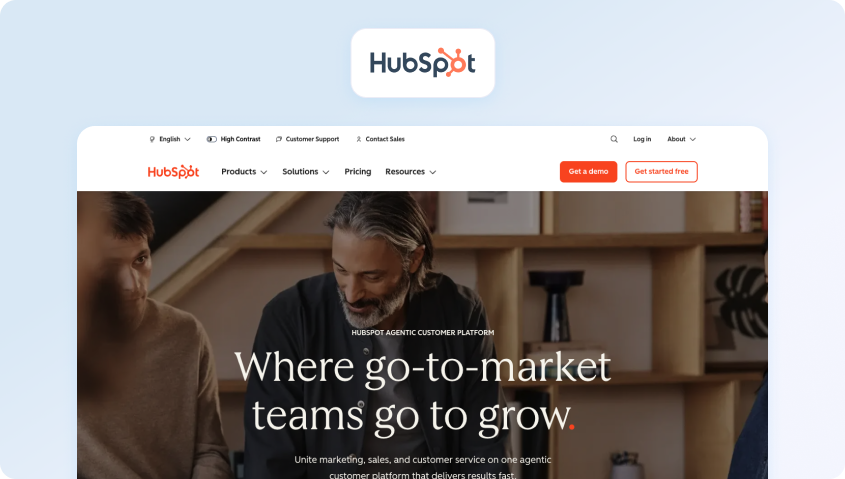
HubSpot Service Hub extends HubSpot's CRM ecosystem with help desk software, live chat, knowledge management, customer feedback tools, and AI-powered support capabilities. It's a natural choice for businesses already using HubSpot's Sales or Marketing Hubs and wanting to manage customer relationships from one familiar platform.
While Service Hub offers strong integration within the HubSpot ecosystem, organizations outside that ecosystem may find more comprehensive omnichannel support or advanced workforce management capabilities elsewhere.
Key Features
- Shared inbox
- Help desk and ticketing
- Knowledge base
- Customer feedback surveys
- AI-powered assistance
- Native HubSpot CRM integration
Pricing
Paid plans start at $10 per seat/month, with more advanced automation, reporting, and AI features available on Professional and Enterprise plans.
Pros
- Seamless integration with HubSpot CRM
- Easy to deploy
- Strong customer lifecycle visibility
Cons
- Delivers the most value within the HubSpot ecosystem
- Advanced functionality requires higher-tier plans
6. Gorgias: Best for Shopify Customer Support Teams
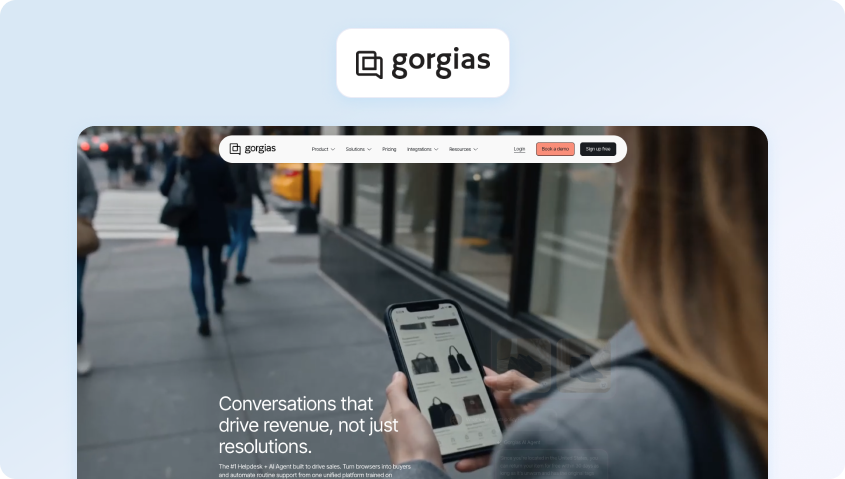
Gorgias has become one of the most popular customer support platforms for e-commerce brands, particularly those using Shopify. It centralises customer conversations across email, chat, social media, and messaging channels while surfacing order information directly within the support interface.
For retailers focused primarily on e-commerce, Gorgias offers purpose-built automation and integrations. However, organizations supporting multiple brands, operating across several business units, or requiring broader workforce management capabilities may eventually need a more comprehensive platform.
Key features
- Shopify integration
- Omnichannel messaging
- Order management context
- AI-powered automation
- Ecommerce macros and workflows
Pricing
Paid plans start at approximately $40 per month, with pricing increasing based on ticket volume and feature requirements.
Pros
- Excellent Shopify integration
- Built specifically for ecommerce
- Strong automation capabilities
Cons
- Pricing scales with support volume
- Less suited to non-ecommerce organizations
7. Intercom: Best for Conversational Customer Engagement

Intercom has evolved from a live chat platform into a comprehensive AI-powered customer service solution. It combines messaging, help centre functionality, AI agents, outbound engagement, and automation to help businesses support customers throughout their lifecycle.
For organizations focused on digital customer engagement and proactive messaging, Intercom remains a strong option. However, organizations looking for integrated workforce management, quality assurance, or native voice capabilities may require additional tools.
Key Features
- AI customer service
- Live chat and messaging
- Knowledge base
- Proactive customer engagement
- Workflow automation
Pricing
Paid plans start at $29 per seat/month, with Fin AI Agent billed separately from $0.99 per successful resolution; additional functionality increases overall costs depending on usage.
Pros
- Excellent conversational experiences
- Strong AI capabilities
- Intuitive user interface
Cons
- Costs can rise quickly as AI usage grows
- Voice support requires additional solutions
8. LiveAgent: Best for Affordable Omnichannel Support

LiveAgent is an established help desk platform offering ticket management, live chat, call centre functionality, and social media support at a competitive price. Its broad channel coverage makes it an attractive option for organizations seeking omnichannel capabilities without enterprise-level pricing.
Compared with Gladly, LiveAgent provides a significantly lower barrier to entry, although larger organizations may find its AI capabilities and advanced analytics less comprehensive than newer AI-focused platforms.
Key Features
- Omnichannel ticketing
- Live chat
- Built-in call centre
- Social media integrations
- Knowledge base
Pricing
Paid plans start at approximately $10 per agent/month, with higher plans unlocking more automation and reporting features.
Pros
- Affordable pricing
- Wide channel coverage
- Quick implementation
Cons
- AI functionality is less advanced than some competitors
- User interface feels dated in places
9. Help Scout: Best for Growing Email-First Support Teams

Help Scout focuses on delivering a simple, intuitive support experience for businesses that prioritise email, live chat, and self-service. Rather than overwhelming users with enterprise functionality, it provides a clean interface that helps smaller teams manage customer conversations efficiently.
For organizations with straightforward support requirements, Help Scout remains an excellent choice. Businesses needing voice support, workforce management, or more sophisticated omnichannel operations may eventually outgrow the platform.
Key Features
- Shared inbox
- Live chat
- Knowledge base
- AI-powered drafting and summaries
- Customer satisfaction reporting
Pricing
Paid plans start at approximately $25 per user/month, with AI Answers available as an optional add-on, priced from $0.75 per successful resolution.
Pros
- Easy to learn
- Excellent user experience
- Strong knowledge base functionality
Cons
- Limited native voice capabilities
- Better suited to smaller or less complex support operations
10. Genesys Cloud CX: Best for Large Enterprise Contact Centres

Genesys Cloud CX is one of the most comprehensive customer experience platforms available, combining omnichannel routing, workforce engagement management, AI, analytics, and automation into a cloud-native contact centre solution. It's designed for large organizations managing high interaction volumes across multiple regions and customer channels.
Compared with Gladly, Genesys Cloud CX offers greater depth for enterprise contact centres, particularly those with complex routing, compliance, and workforce management requirements. However, its breadth of functionality also brings greater implementation complexity, longer deployment times, and a steeper learning curve than many of the other platforms in this guide.
Key Features
- Omnichannel customer engagement
- AI-powered routing and automation
- Workforce engagement management
- Quality assurance and performance analytics
- Journey management and customer insights
Pricing
Paid plans start at $75 per user/month, with advanced AI, workforce engagement, and enterprise capabilities available on higher-tier plans.
Pros
- Comprehensive enterprise feature set
- Advanced workforce management and reporting
- Strong AI and automation capabilities
- Highly scalable global platform
Cons
- More complex to implement than many alternatives
- Higher total cost of ownership
- May offer more functionality than smaller organizations require
11. Front: Best for Collaborative Customer Communication
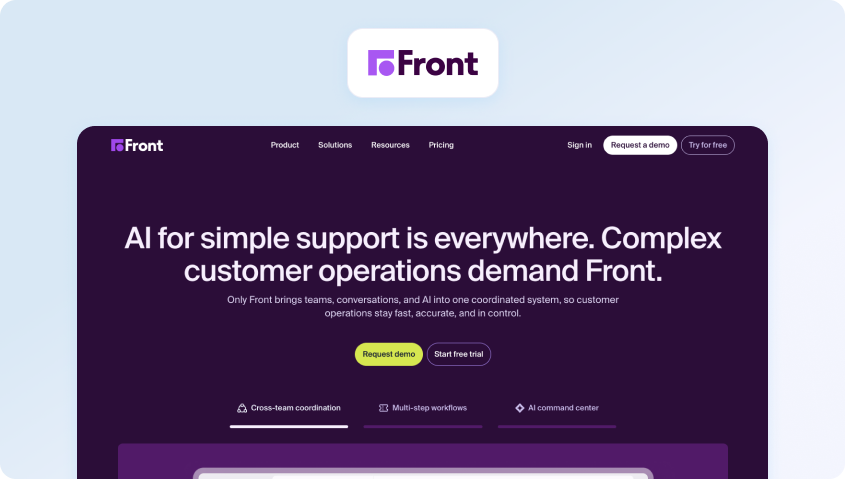
Front combines the familiarity of email with the collaboration features of a modern customer support platform. Shared inboxes, internal comments, workflow automation, and integrations help teams manage customer conversations without relying solely on traditional ticketing systems.
For organizations where collaboration is more important than complex contact centre functionality, Front provides a flexible and intuitive alternative to Gladly. However, businesses requiring native voice support, advanced workforce management, or enterprise-scale omnichannel capabilities may eventually outgrow the platform.
Key Features
- Shared inboxes
- Internal collaboration tools
- Workflow automation
- Email, SMS, and social messaging
- CRM and productivity integrations
Pricing
Paid plans start at $25 per seat/month, with additional automation, analytics, and AI capabilities available on higher-tier plans or as an add-on.
Pros
- Excellent collaboration features
- Clean, intuitive interface
- Strong integration ecosystem
- Easy onboarding
Cons
- Primarily focused on email-based collaboration
- Limited native contact centre functionality
- Advanced features require higher-tier plans
12. Zoho Desk: Best for Affordable Multi-Channel Help Desks

Zoho Desk is a cost-effective customer support platform that combines ticket management, automation, self-service, AI-powered assistance, and multichannel communication. As part of the wider Zoho ecosystem, it's particularly attractive to businesses already using Zoho CRM and other Zoho business applications.
Compared with Gladly, Zoho Desk offers a much lower entry point and transparent pricing, making it a popular choice for growing businesses. While it includes a wide range of customer support capabilities, organizations managing multiple brands, complex global operations, or extensive voice support may require a more specialised platform as they scale.
Key Features
- Omnichannel ticketing
- AI-powered assistance with Zia
- Knowledge base and self-service portal
- Workflow automation
- Native integration with Zoho CRM
Pricing
A free plan is available for up to three agents, with paid plans starting at approximately $7 per agent/month (billed annually). Advanced AI capabilities are available on higher-tier plans.
Pros
- Affordable pricing
- Comprehensive feature set
- Strong value for small and growing businesses
- Seamless integration with the Zoho ecosystem
Cons
- User interface can feel less intuitive than some competitors
- Advanced AI features require higher-tier plans
- Best suited to organizations already invested in Zoho products
How to Choose the Right Gladly Alternative

After reviewing the leading Gladly alternatives, one thing becomes clear: there isn't a single platform that's right for every organization. Some excel at ecommerce, others focus on enterprise contact centres, while others prioritise collaboration or CRM integration. The best choice depends on how your support operation works today and how you expect it to evolve over the next few years.
Here's how to narrow your shortlist.
If Transparent Pricing Matters Most
If you want to understand the total cost of ownership before speaking to sales, platforms with publicly available pricing make budgeting much easier. BlueTweak, Freshdesk, and Zoho Desk all publish their pricing, allowing support leaders to compare plans and forecast costs more accurately than platforms relying on custom quotes.
If You're an E-Commerce Business
Retailers and e-commerce brands should look for platforms that integrate deeply with their commerce stack while giving agents access to customer and order data. Gorgias remains an excellent choice for Shopify-first businesses, while Kustomer combines CRM functionality with customer support. Organizations managing multiple ecommerce brands or international support teams may also benefit from BlueTweak's multi-brand capabilities and multilingual AI.
If You're a Large Enterprise
Enterprise organizations with complex routing requirements, large contact centres, and dedicated implementation teams should consider Zendesk or Genesys Cloud CX. Both platforms offer extensive functionality, although they typically require larger budgets and longer implementation timelines.
If you Want to Adopt AI Gradually
Many organizations aren't looking to replace their agents overnight; they want AI that improves productivity without sacrificing customer experience. BlueTweak takes a staged approach, allowing teams to begin with AI-assisted replies, summarisation, translation, and knowledge surfacing before introducing more autonomous customer-facing automation as confidence grows.
If You Want One Operational System Instead of Multiple Tools
Managing customer support across separate ticketing, QA, workforce management, analytics, and AI platforms can quickly become expensive and difficult to maintain. BlueTweak brings these capabilities together within one operational system, helping organizations reduce software sprawl while improving visibility across every customer interaction.
If You're Already Invested in a CRM
Businesses already using HubSpot CRM or Zoho CRM will often benefit from choosing the matching customer support platform. Native integrations simplify implementation, reduce duplicate data, and provide a more connected customer experience across sales, marketing, and support.
Ultimately, the best Gladly alternative isn't necessarily the platform with the longest feature list. It's the one that aligns with your operational goals, budget, AI strategy, and long-term growth plans.
BlueTweak vs Gladly: Head-to-Head Comparison
While every platform in this guide has its strengths, BlueTweak and Gladly are often shortlisted by organizations looking for a modern, AI-powered customer support platform. Both offer omnichannel support and native voice capabilities, but they differ significantly in their pricing models, AI strategy, and approach to operational scalability.
| Category | BlueTweak | Gladly | Verdict |
|---|---|---|---|
| Pricing transparency | Publicly available pricing with AI assist included in the base platform | Quote-based pricing with no public pricing page | BlueTweak |
| Entry barrier | 5 seat minimum | Reported minimum seat commitments depending on package | BlueTweak |
| AI cost model | AI assist included in the base price | Sidekick AI and voice usage billed separately | BlueTweak |
| Omnichannel support | Voice, email, chat, messaging, social | Voice, email, chat, messaging, social | Tie |
| Multi-brand support | Multiple brands and departments within one instance | More limited multi-brand capabilities | BlueTweak |
Pricing Transparency
Gladly no longer publishes pricing publicly, requiring prospective customers to contact sales for a tailored quote. While this allows for customised pricing, it can make budgeting and vendor comparisons more difficult during the early stages of procurement. BlueTweak, by contrast, publishes its pricing and includes AI assist within its base platform, making it easier to understand the expected cost of ownership before engaging with sales.
Verdict: BlueTweak offers greater pricing transparency and predictability.
Entry Barrier and Seat Minimums
Gladly has historically been associated with minimum seat commitments for certain packages, making it a stronger fit for larger customer support operations. BlueTweak does not position itself around minimum seat thresholds, making it more accessible for organizations wanting to scale without committing to enterprise purchasing models.
Verdict: BlueTweak offers greater flexibility for growing organizations.
AI Cost Model
BlueTweak includes AI assist features such as summarisation, proposed replies, translation, and knowledge surfacing within its base platform. Gladly takes a different approach, with AI capabilities and voice usage typically priced separately according to usage. For organizations carefully managing operational budgets, predictable AI costs can simplify long-term planning.
That said, Gladly's customer-facing AI and native voice capabilities remain among the strongest available for large consumer support operations.
Verdict: BlueTweak wins on cost predictability, while Gladly deserves recognition for the maturity of its customer-facing AI.
Omnichannel Coverage
Both platforms support the communication channels modern customer service teams expect, including voice, email, live chat, messaging, and social channels. Gladly's voice experience has long been one of its strongest differentiators, while BlueTweak combines omnichannel support with workforce management, quality assurance, analytics, and AI within one operational system.
Verdict: Tie. Both platforms provide comprehensive omnichannel coverage.
Multi-Brand and Multi-Department Support
Organizations managing several brands, business units, or regional teams often need clear separation between workflows, reporting, and customer data. BlueTweak supports multiple brands and departments within a single platform instance, helping organizations centralise operations without sacrificing visibility or control.
Verdict: BlueTweak is the stronger choice for multi-brand organizations, BPOs, agencies, and businesses supporting multiple departments.
Want to see how BlueTweak could streamline your own support operation? Book a personalized demo or start a free 14-day trial to explore its AI capabilities, omnichannel workflows, and transparent pricing in action.
Gladly Alternatives: Which Should You Choose?
The right Gladly alternative depends on your team size, support channels, budget, and the level of AI, CRM, and omnichannel functionality you need. Here’s a quick look at which platform may be the best fit for different support operations.
Choose BlueTweak: if you're looking for predictable pricing, AI assistance included in the base platform, and the flexibility to manage multiple brands or departments from one operational system.
Choose Gladly: if you're a large B2C brand where voice interactions are central to the customer experience and premium pricing isn't a barrier.
Choose Zendesk: if you need one of the largest integration ecosystems and are comfortable paying for additional AI capabilities as your requirements grow.
Choose Freshdesk: if you're a smaller or growing support team looking for transparent pricing and a lower-cost entry point.
Choose Kustomer: if a customer timeline and CRM-first experience are your highest priorities.
Choose HubSpot Service Hub: if your business already relies on HubSpot CRM and you want customer support tightly integrated with your existing sales and marketing workflows.
Choose Gorgias: if your support operation revolves around Shopify and ecommerce.
Choose Intercom: if most customer conversations happen inside your product and conversational messaging is your primary support channel.
Choose LiveAgent: if affordability is your biggest priority and you don't require advanced AI or multi-brand capabilities.
Choose Help Scout: if you're looking for a clean, intuitive shared inbox for an email-first support operation.
Choose Genesys Cloud CX: if you're an enterprise organization with complex routing requirements, global operations, and the resources to support a more extensive implementation.
What Is the Best Gladly Alternative?
Gladly remains an excellent customer support platform for large, voice-heavy B2C organizations that want premium customer experiences and have the budget to match. However, its quote-based pricing model, reported seat commitments, and usage-based AI costs mean it won't be the right fit for every organization.
For businesses looking for predictable pricing, AI assist included as standard, and a single operational system that brings together omnichannel support, analytics, workforce management, and multi-brand capabilities, BlueTweak stands out as the strongest Gladly alternative.
If transparent pricing and included AI matter more to your next customer support platform than premium enterprise extras you may never use, book a BlueTweak demo to see the difference within your own support workflows.

As Head of Digital Transformation, Radu looks over multiple departments across the company, providing visibility over what happens in product, and what are the needs of customers. With more than 8 years in the Technology era, and part of BlueTweak since the beginning, Radu shifted from a developer (addressing end-customer needs) to a more business oriented role, to have an influence and touch base with people who use the actual technology.



