



TL;DR
The best conversation intelligence platforms do more than record and transcribe calls. They analyze customer conversations for sentiment, topics, intent, quality, and coaching signals, helping support teams understand what is happening across interactions rather than relying on a small manual sample. In 2026, however, conversation intelligence covers two very different markets: sales-focused tools built around sales calls, and support-focused platforms built around high-volume customer interactions. This guide compares 12 conversation intelligence platforms across both, explains which are designed for support, and looks at whether conversation intelligence should sit on top of your existing support stack or come as part of the platform handling your conversations.
If you are responsible for support quality, there is a good chance you already know you have a visibility problem. Your team handles hundreds, thousands, or even tens of thousands of customer interactions across voice, email, chat, and messaging. Yet when someone asks why CSAT moved, why repeat contacts are increasing, or where agents are struggling, the answer often comes from reviewing a handful of conversations by hand.
That isn’t really conversation intelligence; it’s conversation sampling. The problem becomes more serious as customer expectations rise. PwC's 2025 Customer Experience Survey found that 70% of executives believe customer expectations are evolving faster than their organizations can adapt. The same research found that 29% of consumers had stopped using or buying from a brand because of poor customer experience.
You therefore need to know more than whether an individual interaction went well. You need to see patterns across the customer conversations your team is actually handling: which topics are driving contacts, where sentiment is deteriorating, whether agents are following the right processes, and what is changing from one week to the next. That is where conversation intelligence software comes in.
For support teams, BlueTweak takes a different approach from the traditional analytics layer. Conversation intelligence is part of the same platform handling voice, email, chat, WhatsApp, and Facebook Messenger, with the interaction history and reporting held in one system. That means the analysis is connected to the conversation itself rather than requiring a separate analytics system to ingest it.
But BlueTweak is not the right shape of product for everyone. If you are committed to your existing CCaaS or help desk and simply want to add conversation analytics, a specialist platform may make more sense. The important thing is understanding which type of conversation intelligence platform you are actually buying.
Why Support Teams Need Conversation Intelligence in 2026
Customer support generates huge amounts of information about what customers want, what frustrates them, and where the experience breaks down. The problem is that most teams cannot review enough interactions manually to turn that information into a reliable operational picture.
A QA lead might review a handful of calls or tickets each week, identify a few coaching opportunities, and use those findings to make decisions about the wider operation. But that sample can easily miss emerging topics, changing sentiment, inconsistent handling, or recurring issues buried across thousands of customer interactions.
This is why conversation intelligence goes beyond call recording or meeting notes. Its value lies in turning conversation data into actionable insights across customer experience, quality assurance, coaching, and operational efficiency.
For support leaders, AI adds another layer to the challenge. It can help teams handle more interactions, but you still need visibility into what is happening inside those interactions.
The difference is coverage. Traditional QA tells you what happened in the interactions someone selected for review. Conversation intelligence can show you what is happening across the wider operation.
| Traditional QA approach | Conversation intelligence approach |
|---|---|
| Review a small sample of interactions | Analyze interactions at scale |
| Find issues you already know to look for | Surface recurring topics, trends, and patterns |
| Rely on individual reviews to identify coaching needs | Use conversation insights to target coaching where it matters |
| Make assumptions about the wider operation | Make decisions using a broader view of customer interactions |
That broader view is what makes conversation intelligence useful. But before you choose a platform, you need to understand what kind of conversation intelligence you are actually buying.
Not every product marketed as conversation intelligence is designed for support.
What Is Conversation Intelligence Software?
Conversation intelligence software captures and transcribes customer conversations, then uses natural language analysis to identify patterns and surface insights that would be difficult to find through manual review. Depending on the platform, this can include sentiment, topics, intent, quality scores, coaching signals, and conversation trends across voice and digital channels.
Modern conversation intelligence platforms typically bring together several capabilities:
- Conversation capture: Records or ingests customer interactions across supported channels.
- Diarized transcription: Converts conversations into text while distinguishing between speakers.
- Topic and intent analysis: Identifies what customers are contacting you about, including topics you may not have explicitly configured.
- Sentiment analysis: Detects sentiment at the interaction level and helps identify broader changes in customer sentiment over time.
- Automated quality evaluation: Applies defined criteria to conversations so teams can evaluate more interactions without relying entirely on manual QA.
- Actionable insights: Turns conversation data into coaching opportunities, quality signals, trends, and other information that can feed operational workflows.
The important distinction is between conversation intelligence software and tools that simply record or transcribe interactions. A transcript gives you a searchable record. Conversation intelligence analyzes that record to help you understand what happened and identify patterns across customer interactions.
Coverage matters, too. A system that analyzes every interaction gives you a fundamentally different view from one that analyzes only the calls or tickets selected for manual review. The more conversations a platform can analyze across your operation, the more useful its conversation insights become.
This guide focuses specifically on software that analyzes conversations that have already happened. It does not cover conversational AI builders such as Dialogflow, Rasa, or Kore.ai, which are designed to build AI-powered customer interactions, or "conversational intelligence" as a human communication and coaching methodology.
That distinction becomes important because the same terminology now covers several very different types of software.
How Conversation Intelligence Got Here, and Why Some Tools Are Still Stuck
Conversation intelligence did not start with AI. The category has evolved through several stages, and some products marketed as modern conversation intelligence software still rely heavily on techniques from earlier generations.
Call recording came first. It gave contact centers a record of customer interactions that managers could retrieve when they needed to investigate a complaint, review an agent's performance, or check what was said. But recording alone does not tell you what is happening across thousands of conversations.
Speech analytics added transcription and search. Historically, these systems relied heavily on keyword spotting and phonetic indexing to find specific terms or phrases in voice recordings. That made it faster to locate known issues, but created an obvious limitation: you could only reliably find what you had already thought to search for.
Conversation intelligence added natural language processing and natural language understanding to the transcript, making it possible to identify sentiment, intent, topics, and other signals rather than simply storing a written record of the conversation. Instead of simply asking whether a particular word appeared, teams could analyze sentiment, identify topics and behaviors, and connect conversation patterns to outcomes such as quality scores or sales performance.
Then came the LLM era. Modern conversation intelligence products can use configurable analysis pipelines, generated summaries, evidence-linked scoring, and analysis across digital channels as well as voice. The result is less about searching recordings and more about turning large volumes of conversation data into operational insight.
But not every product has made that leap.
A useful test is simple: ask whether the platform can surface a topic you never configured it to look for. If it can only identify predefined words, phrases, or rules, you are looking at a form of speech analytics rather than the broader capabilities associated with modern conversation intelligence.
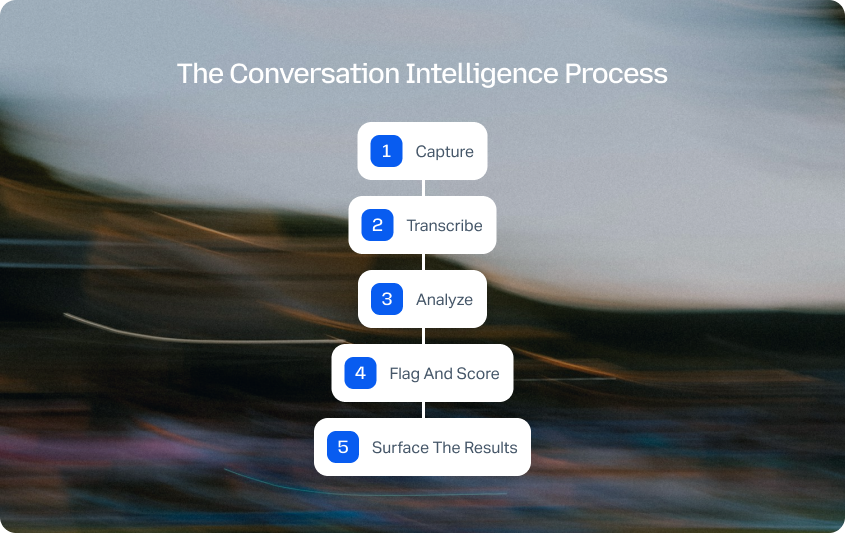
At a high level, the process looks like this:
- Capture the customer interaction.
- Transcribe it with speaker separation.
- Analyze the conversation for sentiment, topics, intent, and behavior.
- Flag and score relevant interactions against defined criteria.
- Surface the results in a workflow where managers and agents can act on them.
The technology has changed considerably. The operational question has not: can the system turn the conversations your team is already having into information you can actually use?
Best Conversation Intelligence Software at a Glance
Disclosure: BlueTweak publishes this guide and is included in the list. No vendor paid for inclusion. We reviewed vendor documentation, published pricing where available, and independent review sources. Not every platform was trialed live, and pricing and product capabilities can change, so verify current details with the vendor before making a purchase decision.
There is no single best conversation intelligence software for every organization. The right choice depends on where your conversations happen, how much of that interaction volume you need to analyze, and whether you want conversation intelligence as a separate analytics layer or as part of the platform already handling customer interactions.
The table below gives you the shortlist at a glance. We have deliberately included both support and sales products because they frequently appear together in searches for the best conversation intelligence platforms, but they solve different problems.
| Tool | Built for | Layer or platform | Best for |
|---|---|---|---|
| BlueTweak | Support, omnichannel | Platform | Teams that want conversation intelligence native to the system handling their customer conversations |
| Dialpad | Support and sales voice | Platform | Teams wanting real-time voice intelligence built into their phone system |
| Zendesk QA | Support QA | Layer, Zendesk-first | Zendesk teams adding automated QA without leaving their existing suite |
| Observe.AI | Contact centers | Layer | Automating quality assurance across voice and digital interactions at scale |
| Level AI | Contact centers | Layer | Combining conversation analytics and automated QA in one specialist platform |
| CallMiner | Regulated contact centers | Layer | Compliance analytics, root cause analysis, and large-scale conversation analysis |
| Cresta | High-conversion inbound teams | Layer | Real-time agent guidance and conversation intelligence tied to operational outcomes |
| Balto | Live-call support | Layer | In-the-moment guidance, prompting, and compliance checks during customer calls |
| Verint | Enterprise workforce engagement | Layer | Adding conversation analytics to existing contact center infrastructure |
| NICE Enlighten | Enterprise CCaaS | Layer, NICE-native | Organizations already standardized on NICE CXone |
| Gong | Sales and revenue teams | Layer | Deep sales call analytics, coaching, and revenue intelligence |
| Avoma | Sales and revenue teams | Layer | Meeting intelligence, coaching, and customizable scorecards for revenue teams |
Layer vs. platform: A layer analyzes conversations imported from another system, while a platform already handles the customer interaction itself. That distinction matters because it affects integrations, data flow, workflow, and where conversation insights ultimately appear.
The BlueTweak Conversation Intelligence Scoring Rubric
To make the comparison more useful than a feature-counting exercise, we evaluated each platform against eight criteria:
| Criterion | Weight | What we looked for |
|---|---|---|
| Analysis coverage | 25% | Automated analysis across interactions rather than only a sampled QA queue |
| Channel scope beyond voice | 15% | Voice, email, chat, and messaging analyzed within the same interaction model |
| Real-time assist | 15% | Live speech recognition and guidance surfaced to agents during conversations |
| Where the insight lands | 15% | Insights appear in the same system and reporting model as the interaction, rather than requiring a second console |
| Time to value | 10% | Useful output within days or weeks without requiring a manual taxonomy build first |
| Language coverage | 10% | Transcription and analysis beyond English, with a clearly stated language count |
| Pricing transparency | 5% | Published pricing and clear explanation of whether analysis is metered separately |
| Security and compliance | 5% | Capabilities such as PII redaction, SOC 2 Type II, role-based access controls, and audit logs |
Pricing & Feature Disclaimer
Pricing, features, AI capabilities, integrations, and trial availability were verified from publicly available vendor information at the time of publication. Software platforms update their products frequently, so details may change after publication. We recommend confirming the latest pricing and feature availability with each vendor before making a purchasing decision.
The weighting reflects the priorities of a support operation rather than a sales organization. Coverage receives the highest score because conversation intelligence is only as useful as the conversations it can actually analyze. A platform with sophisticated AI that sees only a fraction of your customer interactions may tell you less about the operation than a simpler system with much broader coverage.
The same principle applies throughout the comparison. A real-time coaching feature may be valuable for a contact center focused on live calls, while multilingual analysis or omnichannel coverage may matter more to a support operation handling customers across markets and channels.
The result is a comparison designed to answer a practical question: which conversation intelligence solution is best suited to the way your support operation actually works?
The 12 Best Conversation Intelligence Platforms in 2026
The best conversation intelligence platforms are not interchangeable. Some are complete customer support platforms with conversation intelligence built in, while others are specialist analytics layers that sit alongside an existing contact center or help desk.
That distinction matters. A support leader looking to understand thousands of customer interactions has different requirements from a sales leader analyzing a handful of sales calls each week.
To make the differences clearer, we have grouped these conversation intelligence software tools into four categories: support platforms with conversation intelligence built in, specialist contact center conversation intelligence and auto-QA tools, enterprise workforce engagement suites, and sales and revenue conversation intelligence platforms.
Category 1: Support Platforms With Conversation Intelligence Built In
These platforms combine conversation intelligence with the systems used to manage customer interactions. Instead of adding a separate analytics layer to your existing stack, conversation data, transcripts, quality assurance, and operational reporting are part of the wider support environment.
That can reduce integration work and give support leaders a more connected view of customer interactions, particularly when conversations span multiple channels.
1. BlueTweak: Best for Support Teams That Don't Want a Second System

BlueTweak is a customer support platform with conversation intelligence built into the wider CX operation, rather than a standalone analytics layer. It handles customer interactions across voice, chat, email, and social messaging, then connects transcripts, summaries, quality assurance, analytics, and customer context to the same interaction record.
That connected approach also means conversation insights can feed into other support workflows, rather than sitting in a separate analytics dashboard. For example, Proposed Reply can use the context already available from the customer interaction to help agents draft relevant responses, giving teams a practical way to turn conversation intelligence into action.
Key conversation intelligence features
- Conversation coverage: BlueTweak automatically transcribes calls and chats across 100+ languages, with speaker-labeled transcripts linked directly to the interaction timeline and customer profile.
- Analysis and QA: Transcripts feed into AI summaries and structured quality evaluations, allowing QA teams to work from the actual conversation rather than reconstructed notes. BlueTweak's QA platform also connects quality findings with metrics such as AHT, FCR, and CSAT.
- Where insights land: BlueTweak builds analytics and reporting on the same interaction data used to manage support, with real-time dashboards covering email, chat, voice, and social interactions.
- Omnichannel advantage: BlueTweak treats conversations across voice, chat, email, and social messaging as part of one interaction model, rather than requiring separate analysis for each channel.
Pricing: BlueTweak publicly lists pricing from €65 per agent per month, including email, chat, voice, social messaging, analytics, QA, WFM, and other core capabilities. AI features and usage terms can be checked against the current pricing page before purchase
“Support leaders don't need another dashboard telling them what happened in a handful of conversations, they need a reliable view of what is happening across the customer interactions they are responsible for. When conversation intelligence sits inside the platform handling those interactions, insights can connect directly to quality, customer experience, and operational decisions, rather than becoming another report someone has to interpret and act on.” — Radu Dumitrescu, Head of Automation & Digital Transformation, BlueTweak
Where BlueTweak fits best: Support teams that want conversation intelligence to arrive with their customer support platform rather than adding another analytics console, particularly where multiple channels, languages, brands, or operational teams make fragmented systems harder to manage.
Where it falls short: BlueTweak is best suited to teams evaluating their wider support platform rather than organizations that only want to bolt conversation analytics onto an existing CCaaS deployment. If your current infrastructure is fixed and working well, a specialist conversation intelligence layer may require less platform change.
BlueTweak in action: Global outsourcing provider Conectys needed to consolidate data from different systems, improve reporting, give clients better access to information, and improve the efficiency and quality of its support operation. Conectys implemented BlueTweak to centralize those workflows and provide a more connected operational view.
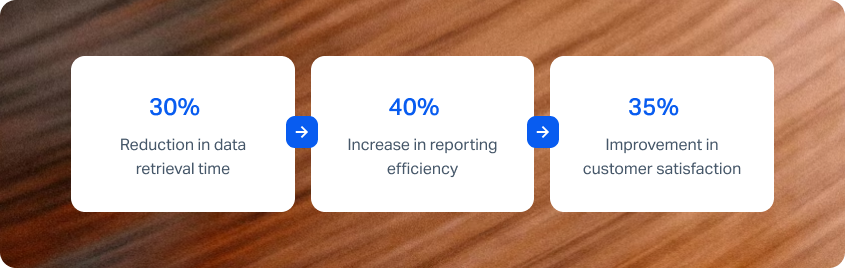
The implementation also delivered a 25% reduction in resolution times, demonstrating how better visibility and connected support workflows can translate into measurable operational improvements.
Customer: Conectys, global BPO and outsourcing provider
Challenge: Consolidating data, improving reporting, increasing operational efficiency, and maintaining customer and agent satisfaction across complex support operations.
Results: Faster data retrieval, more efficient reporting, higher customer satisfaction, and shorter resolution times.
Verdict: Best for support teams that want conversation intelligence native to the platform handling their customer conversations. BlueTweak's main differentiator is not simply automated analysis. It is the connection between the conversation, transcript, QA process, customer data, and operational reporting in one system.
Want to see what’s actually inside your own conversations? Book a personalized BlueTweak demo or start a 14-day free trial , no credit card required.
2. Dialpad: Best for Voice-Centric Teams Wanting Real-Time Intelligence

Dialpad takes a platform approach to conversation intelligence, with AI capabilities built into its communications and contact center products. Its support offering combines voice infrastructure with AI-powered transcription, sentiment analysis, contact center analytics, and other tools, making it particularly relevant for organizations where voice remains a major part of the support operation.
Key conversation intelligence features
- Real-time transcription: AI-powered transcription and conversation analysis are built into Dialpad's communications environment.
- Sentiment analysis: Dialpad can analyze customer sentiment and conversation trends.
- Contact center analytics: Support teams can use AI-powered analytics alongside their contact center workflows.
- AI assistance: Dialpad also offers AI agents and other automation capabilities across voice and digital channels.
- Platform approach: Conversation intelligence sits within the wider communications and contact center platform rather than operating as a separate analytics layer.
Pricing: Dialpad publishes pricing for its support and communications products, with current pricing varying by plan, billing arrangement, and region. Plans start at $80 per user per month for the Essentials Plan.
Best fit: Support organizations that want voice infrastructure, AI assistance, transcription, and analytics within the same communications platform.
Where it falls short: Dialpad's conversation intelligence has strong voice roots. Teams where email, chat, and messaging represent a significant share of customer interactions should verify that its current channel coverage matches their requirements.
Verdict: A strong option for voice-centric support teams that want real-time conversation intelligence built into their communications platform.
3. Zendesk Quality Assurance: Best for Zendesk teams Adding Automated QA Without Leaving the Suite

Zendesk Quality Assurance is designed to automate interaction reviews within the Zendesk environment. Zendesk says its QA product can use AI to automate review of 100% of tickets, giving teams broader quality coverage than traditional manual sampling.
Key conversation intelligence features
- Automated QA: AI can evaluate interactions against defined quality criteria.
- Interaction coverage: Automated evaluation can extend quality monitoring across a much larger proportion of interactions than manual review alone.
- Quality dashboards: Teams can monitor scores and pass rates to identify quality issues and coaching opportunities.
- Zendesk integration: QA operates within the wider Zendesk customer service environment.
Pricing: Zendesk QA pricing is not presented as a simple standalone conversation intelligence subscription; is an optional add-on layer that must be purchased on top of your core plan. Add-on pricing for QA starts at $35 per agent per month.
Best fit: Existing Zendesk customers whose primary requirement is automated quality assurance without introducing a separate specialist platform.
Where it falls short: Zendesk QA is primarily a quality assurance capability within the Zendesk ecosystem rather than a standalone conversation intelligence platform. Teams looking for deeper cross-channel conversation analytics should compare the wider capabilities carefully.
Verdict: A logical choice for Zendesk-first teams that want to automate QA without adding another support platform.
Category 2: Specialist Contact Center Conversation Intelligence and Auto-QA
Specialist platforms take a different approach. They are designed to sit on top of existing contact center infrastructure and add conversation analytics, automated quality assurance, coaching, compliance monitoring, or real-time assistance.
This can be attractive when your CCaaS is already established and replacing it is not on the table. The trade-off is that conversation intelligence becomes another layer in the technology stack.
4. Observe.AI: Best for Automating Quality Assurance Across Voice and Digital at Scale

Observe.AI is a specialist contact center intelligence platform focused on conversation intelligence, automated quality assurance, agent coaching, and compliance. Its platform can analyze customer interactions across channels and automatically score conversations against quality and compliance criteria. Observe.AI says its systems can analyze 100% of interactions, with capabilities including intent detection, sentiment analysis, automated QA, and PII redaction.
Key conversation intelligence features
- Automated QA: Observe.AI can apply configurable quality criteria across interactions rather than relying on a small manually selected sample.
- Conversation analysis: Observe.AI analyzes intent, sentiment, behaviors, and compliance signals, giving QA teams more context than keyword search alone.
- Compliance: Automatic PII redaction and compliance monitoring are particularly relevant to regulated contact centers.
- Deployment: Observe.AI is a specialist layer, so it works alongside existing contact center infrastructure rather than replacing it.
Pricing: Observe.AI does not publicly publish this information. Pricing should be confirmed directly with the vendor and evaluated against interaction volume, users, integrations, and implementation requirements.
Best fit: Contact centers that want automated QA and conversation intelligence while retaining their existing CCaaS infrastructure.
Where it falls short: As a specialist layer, Observe.AI introduces another system alongside the platform already handling customer interactions. Teams should also evaluate implementation requirements and the effort involved in configuring custom scorecards.
Verdict: A strong specialist option for contact centers looking to expand QA coverage without replacing their existing infrastructure.
5. Level AI: Best for Consolidating QA and Conversation Analytics
Level AI is an AI-native contact center intelligence platform that combines automated QA, conversation intelligence, agent coaching, Voice of the Customer insights, and agent assist. Its Auto-QA capability is designed to score 100% of interactions against custom criteria, while its conversation analysis identifies intent, sentiment, and customer concerns.
Key conversation intelligence features
- Automated quality: Level AI's QA-GPT scores conversations against custom scorecards and provides evidence and reasoning for its evaluations.
- Conversation intelligence: Semantic analysis is designed to understand the context of conversations rather than simply match predefined keywords.
- Voice of the Customer: Level AI can surface recurring customer issues and themes from interaction data, helping teams identify problems beyond individual QA reviews.
- Real-time assist: Level AI also offers live agent guidance, although its core differentiation remains broader contact center intelligence and QA.
- Compliance: Level AI states that it holds GDPR, HIPAA, SOC 2, and PCI certifications.
Pricing: This information is not publicly published. Request current pricing from Level AI and confirm whether costs vary according to users, interaction volume, modules, or implementation requirements.
Best fit: Contact centers that want QA, conversation analytics, coaching, and Voice of the Customer capabilities in one specialist platform.
Where it falls short: Level AI's broad feature set may be more than teams need if their requirement is limited to post-interaction QA or transcription. Pricing also requires a vendor conversation, making early cost comparison more difficult.
Verdict: A good fit for contact centers looking for a broad specialist conversation intelligence and QA platform.
6. CallMiner: Best for Regulated Contact Centers Needing Deep Compliance Analytics

CallMiner is one of the more established names in conversation and speech analytics, with a particular strength in compliance monitoring, customer journey analysis, and large-scale interaction analytics. Its platform can process voice and digital interactions and uses AI to surface topics, sentiment, behaviors, and other signals from customer conversations.
Key conversation intelligence features
- Analytics depth: CallMiner combines conversation analytics with emotion detection, sentiment, topics, and customer journey analysis.
- Compliance: Its long-standing focus on regulated contact centers makes it particularly relevant where monitoring adherence and risk is a major priority.
- Omnichannel analysis: CallMiner supports analysis of calls and digital interactions, allowing teams to look beyond voice alone.
- Deployment: CallMiner is a specialist analytics layer designed to work with existing contact center infrastructure.
Pricing: CallMiner pricing can depend on factors such as users, interaction volume, analytics modules, and integration requirements. Request a current quote from the vendor.
Best fit: Regulated or enterprise contact centers that need mature conversation analytics, compliance monitoring, and detailed root cause analysis.
Where it falls short: CallMiner's depth can mean a more involved implementation. Teams prioritizing rapid deployment and minimal configuration should compare its time-to-value against newer AI-native alternatives.
Verdict: A strong choice for organizations that need deep conversation analytics and compliance capabilities and can support a more involved implementation.
7. Cresta: Best for Real-Time Agent Guidance Tied to Customer Outcomes
Cresta combines conversation intelligence with real-time agent assist and AI-powered automation. Its Conversation Intelligence product analyzes interactions for sentiment, friction, process gaps, and quality, while its Agent Assist capability listens to live conversations and surfaces guidance during the interaction.
Key conversation intelligence features
- Real-time intelligence: Cresta's Agent Assist interprets live conversations and surfaces answers, hints, and guided workflows while the agent is still speaking to the customer.
- Conversation analysis: Cresta uses conversation intelligence to identify recurring issues, score interactions, and surface coaching opportunities.
- Shared intelligence layer: Conversation Intelligence, Agent Assist, and AI Agent capabilities operate on a shared platform, allowing insights from conversations to feed other CX workflows.
- Deployment: Cresta is designed to deploy alongside existing contact center technology rather than requiring a full CCaaS replacement.
Pricing: This is another vendor without published pricing details; verify with Cresta for accurate pricing specifics. Cresta describes its pricing as dependent on modules, interaction volumes, channels, and implementation scope.
Best fit: High-complexity contact centers where real-time agent guidance is as important as post-interaction conversation analysis.
Where it falls short: Cresta's wider AI and automation capabilities can make it a more substantial purchase than teams need if their primary requirement is simply automated QA or post-call analysis.
Verdict: A strong choice for high-conversion or high-complexity contact centers where real-time agent guidance is as important as post-call conversation analysis.
8. Balto: Best for In-The-Moment Prompting and Compliance Checks

Balto is built around real-time guidance. Rather than focusing primarily on what happened after a call, Balto surfaces prompts, scripts, recommendations, and compliance guidance while the conversation is still taking place. Its broader platform also includes automated QA, coaching, and conversation insights.
Key conversation intelligence features
- Real-time guidance: Balto listens to live conversations and provides agents with prompts and guidance at the moment they need them.
- Compliance: Real-time prompts and checklists can help agents follow required processes and statements during calls.
- Automated QA: Balto offers automated quality evaluation alongside its live guidance capabilities.
- Integrations: Balto says it works with 50+ CCaaS and softphone systems, meaning it is designed to sit alongside existing telephony infrastructure rather than replace it.
Pricing: Balto uses modular pricing across products including Guidance, QA, Coaching, Notes, Insights, and Omnichannel. Current pricing needs to be confirmed directly with the vendor as no pricing details are published on their website.
Best fit: Contact centers where improving agent performance during live calls is the primary objective.
Where it falls short: Balto's strongest differentiation is real-time guidance. Teams primarily looking for deep post-interaction analytics, broad conversation trends, and extensive customer conversation analysis should compare it with more analytics-led platforms.
Verdict: Best suited to contact centers where real-time agent guidance is the priority.
Category 3: Enterprise Workforce Engagement Suites
The next group approaches conversation intelligence as part of a much larger enterprise contact center ecosystem. These platforms combine analytics with capabilities such as quality management, workforce management, performance management, and CCaaS.
They can be particularly compelling for organizations that already have a significant investment in the underlying platform. For teams starting from scratch, however, the broader suite may be more than they need.
9. Verint: Best for Enterprise Teams Layering Analytics onto Existing Contact Center Infrastructure

Verint provides conversation and interaction analytics as part of its wider customer experience and workforce engagement portfolio. Its current analytics offering covers voice and digital interactions, with AI-powered topic detection, sentiment analysis, intent classification, automated quality management, and GenAI-powered insights.
Key conversation intelligence features
- Omnichannel analysis: Verint's current platform analyzes voice, chat, email, and other digital interactions, rather than restricting conversation intelligence to calls.
- Automated QA: Verint says its AI-powered quality management can evaluate up to 100% of interactions across voice and digital channels.
- Conversation insights: Topic detection, sentiment, intent, compliance scoring, and automated summaries can feed quality, coaching, and CX workflows.
- Enterprise integration: Verint is designed to work with existing contact center infrastructure, making it relevant to organizations that cannot or do not want to replace their CCaaS.
Pricing: Not publicly published. Request a current quote from Verint based on the products, users, interaction volume, and implementation requirements involved.
Best fit: Enterprise contact centers that want conversation intelligence connected to a broader workforce engagement strategy.
Where it falls short: Verint's enterprise breadth can make implementation and evaluation more complex than a focused conversation intelligence purchase. Organizations looking only for automated QA or conversation analytics may not need the wider suite.
Verdict: A strong enterprise option for teams that want conversation intelligence alongside a broader workforce engagement platform.
10. NICE Enlighten: Best for Teams Already Standardized on NICE CXone
NICE Enlighten brings AI-powered intelligence into the NICE ecosystem, where conversation analytics sits alongside CCaaS, workforce management, quality management, and other contact center capabilities. For organizations already standardized on NICE CXone, that native ecosystem is the main attraction.
Key conversation intelligence features
- CCaaS-native analytics: NICE combines interaction analytics with the broader CXone platform, reducing the integration work required when the underlying conversations already run through NICE.
- Interaction coverage: NICE's current CXone packaging includes interaction analytics, automated summaries, and AI copilot capabilities across its workforce empowerment offering.
- Wider workforce stack: NICE combines conversation intelligence with quality management, workforce management, performance management, and other contact center capabilities.
Pricing: NICE Enlighten AI pricing is integrated into the CXone ecosystem. It is available through the CXone Mpower Ultimate suite at $249 per agent per month, which bundles the full Enlighten AI toolkit, including Actions, Autopilot, Copilot, and XM, alongside core omnichannel capabilities. Other CXone packages may also include relevant Enlighten capabilities, so contact NICE for a personalized quote based on your requirements.
Best fit: Organizations already standardized on NICE CXone that want to extend their existing investment into conversation intelligence and AI-powered workforce management.
Where it falls short: NICE's strongest advantage is its ecosystem. Teams that are not already invested in NICE should compare the cost and complexity of adopting the wider platform against specialist conversation intelligence tools.
Verdict: The natural choice for organizations already committed to NICE CXone and looking to extend that investment into conversation intelligence and AI-powered workforce management.
Category 4: Sales and Revenue Conversation Intelligence
Finally, we come to the products that dominate many searches for best conversation intelligence software but are not primarily designed for customer support.
Gong and Avoma are highly capable conversation intelligence tools, but their core use cases revolve around sales calls, revenue teams, meetings, coaching, and CRM data. They belong in this guide because support buyers are likely to encounter them during research, but they should not be evaluated as though they solve the same problem as a support-focused platform.
11. Gong: Best for Teams Wanting Deep Deal and Sales Conversation Analytics
Gong is one of the best-known sales conversation intelligence platforms, built around revenue teams rather than high-volume customer support. Gong records and analyzes sales conversations, connects insights with CRM data, and provides tools for sales coaching, deal execution, and revenue intelligence.
Key conversation intelligence features
- Sales conversation analysis: Gong analyzes sales calls and meetings for topics, objections, competitor mentions, and other signals relevant to the sales process.
- Coaching: Sales managers can use conversation data to identify coaching opportunities, compare rep behavior, and examine patterns associated with successful deals.
- CRM integration: Gong connects conversation data with CRM and revenue workflows, making it particularly useful for sales leaders who want conversation insights connected to pipeline activity.
- Revenue intelligence: Gong extends beyond individual call analysis into deal and pipeline intelligence for revenue teams.
Pricing: Gong does not publish a simple public price list. Its pricing model includes user licensing and a platform fee, with final pricing dependent on the organization's requirements.
Best fit: Sales and revenue teams that want deep conversation analysis connected to pipeline, CRM, coaching, and sales performance.
Where it falls short for support: Gong is designed around sales conversations rather than high-volume inbound customer interactions. A support team analyzing thousands of calls, chats, emails, and messages will have very different requirements from a sales team reviewing scheduled meetings.
Verdict: One of the strongest conversation intelligence platforms for sales teams, but not a natural choice for support organizations looking for broad customer interaction analysis.
12. Avoma: Best for Smaller Revenue Teams Wanting Coaching at a Published Price

Avoma combines AI meeting assistance with conversation intelligence and revenue intelligence, giving sales and customer-facing teams tools for transcription, summaries, topic analysis, call scoring, coaching, and CRM workflows. Its published pricing makes it easier to evaluate than many enterprise sales intelligence platforms.
Key conversation intelligence features
- Conversation intelligence: Avoma offers sentiment analysis, topic identification, custom keyword and semantic trackers, call scoring, and conversation intelligence dashboards.
- Coaching: Custom scorecards and conversation analysis can help sales managers identify coaching opportunities and track performance.
- Meeting coverage: Avoma is built around meetings and calls, with integrations for platforms including Zoom, Microsoft Teams, Google Meet, Webex, and dialers.
- Meeting lifecycle: Avoma supports the meeting lifecycle from scheduling and preparation through recording, transcription, notes, and post-meeting analysis, rather than focusing solely on conversation analysis.
- Free users: Viewers and collaborators do not require paid recorder seats, which can make Avoma comparatively accessible for distributed revenue teams.
Pricing: Avoma's Startup plan starts at $19 per recorder seat per month when billed annually, with viewers free. Avoma also offers higher-tier plans and conversation intelligence capabilities, so teams should compare the current plan structure against their specific requirements.
Best fit: Smaller sales and revenue teams looking for meeting intelligence, coaching, and conversation analytics without an enterprise-only buying process.
Where it falls short for support: Avoma is fundamentally a meeting and revenue intelligence platform. Its strengths are sales meetings, coaching, CRM workflows, and revenue conversations rather than high-volume inbound support across a CCaaS or help desk.
Verdict: A compelling option for sales and revenue teams, but not a natural fit for support operations that need broad customer conversation coverage.
Sales Conversation Intelligence vs. Support Conversation Intelligence: Which Do You Actually Need?
The term conversation intelligence is used for both sales and customer support software, but the two categories solve different problems.
Sales conversation intelligence is usually designed around scheduled sales calls and meetings. It helps revenue teams understand why deals are won or lost, coach sales reps, identify objection-handling patterns, and connect conversation insights with CRM data.
Support conversation intelligence has a different job. It needs to make sense of high-volume inbound customer interactions, often across voice, email, chat, and messaging, and help support leaders understand why customers are contacting them and whether those interactions were handled well.
| Sales conversation intelligence | Support conversation intelligence | |
|---|---|---|
| Question it answers | Why did we lose that deal? | Why are customers contacting us, and did we handle it well? |
| Who buys it | VP Sales, RevOps, Sales Enablement | Head of CX, Support Operations, QA Lead |
| Conversation type | Outbound and scheduled calls, usually virtual meetings | High-volume inbound across voice, email, chat, and messaging |
| Headline metrics | Talk-to-listen ratio, objection frequency, deal risk, win rate | CSAT, FCR, AHT, containment, sentiment, QA score |
| Integrations that matter | CRM, calendar, conferencing | CCaaS or help desk, WFM, knowledge base |
| Typical pricing unit | Per rep, per month | Per seat plus metered analysis, or included in the platform |
| Representative platforms | Gong, Avoma, Clari, Jiminny, Fireflies | BlueTweak, Observe.AI, Level AI, CallMiner, Cresta, Balto |
If you run inbound support, the sales-focused platforms dominating many best conversation intelligence platforms lists are not shortlist candidates simply because they have strong ratings or impressive AI features. They are built around a different conversation, a different workflow, and a different buyer.
There is one important exception. Some organizations genuinely need both sales and support conversation intelligence. In that case, you are not choosing one universal tool. You are potentially buying two systems designed around two very different operational problems.
For support leaders, the distinction also raises a more fundamental question: where does the conversation intelligence actually live?
Some platforms are specialist analytics layers. They ingest conversations from your existing CCaaS or help desk, analyze them in a separate system, and return the insights through their own interface.
Others make conversation intelligence part of the platform that already handles the customer interaction.
That difference affects more than the technology. It determines where your data lives, where managers see the resulting insights, how much integration is required, and how many systems your team has to maintain.
For a support operation, that is often the more important buying decision than the number of features on the product page.
Where Support Conversation Intelligence Programs Break
Choosing a conversation intelligence tool is not simply a matter of finding the platform with the longest feature list. Support teams need to know whether the system can actually give them a reliable view of customer interactions and turn that visibility into action.
Four problems tend to undermine that goal:
1. Sampling Bias
Manual QA is useful, but it is still a sample. If managers review a small percentage of conversations, they can identify individual problems without knowing whether those problems are isolated incidents or symptoms of a wider trend.
A stronger conversation intelligence platform should help teams analyze a much broader set of interactions, making it easier to spot recurring topics, changes in sentiment, and patterns in agent behavior.
2. Disconnected Insights
Conversation analysis is less useful when it lives separately from the systems used to manage customer support.
If a QA lead has to move between a CCaaS platform, help desk, conversation intelligence tool, analytics dashboard, and workforce management system to understand what happened, valuable context can get lost between systems.
For support teams, the better question is not simply whether a tool produces conversation insights, but whether those insights connect to the workflows and customer data already used to manage the operation.
3. Voice-Only Coverage
Many conversation intelligence products were built around recorded sales calls or contact center voice interactions. That can leave important parts of the customer journey outside the analysis.
Modern support operations span multiple communication channels. Customers may start with chat, move to email, then call when the issue remains unresolved. If conversation intelligence only analyzes voice, support leaders may be looking at one part of the customer interaction while missing the rest.
4. Slow Configuration
Conversation intelligence is only useful if teams can adapt it as their operation changes.
New products launch. Policies change. Contact reasons evolve. Customers start asking different questions. A platform that requires extensive manual configuration every time you want to investigate a new topic can quickly become a bottleneck.
Modern conversation intelligence software should make it possible to identify emerging themes and investigate customer conversations without requiring teams to build a new rule for every possible phrase or scenario.
The common thread is coverage. A platform can have excellent transcription, impressive AI features, or sophisticated dashboards and still leave support leaders with an incomplete picture of what customers and agents are actually saying.
That gives us a more useful way to evaluate the best conversation intelligence platforms: not by how many features they advertise, but by how effectively they help support teams see, understand, and act on their customer conversations.
What to Look For in a Conversation Intelligence Platform

The right conversation intelligence platform should do more than transcribe customer interactions and produce attractive dashboards. For support teams, the real test is whether it can give you a reliable view of customer conversations, turn that data into useful insights, and fit into the way your operation already works.
We evaluated the platforms in this guide against five criteria: coverage, analysis depth, operational integration, time-to-value, and transparency.
Coverage
Coverage should be the first question to ask. A platform that can analyze a broad range of customer interactions gives support leaders a very different picture from one that only analyzes selected calls.
Look beyond voice to the multiple communication channels your customers actually use, including email, chat, messaging, and social interactions. Language and interaction-type coverage matter too, particularly for teams operating across markets.
The key question is: How much of our customer conversation data will this platform actually see?
Analysis Depth
Transcription is the foundation of conversation intelligence, not the finished product.
The best conversation intelligence software can go further by identifying sentiment, intent, key topics, behaviors, and recurring conversation trends. For support teams, capabilities such as automated quality assurance, call scoring, and behavioral analysis can turn that information into actionable coaching insights.
Look for platforms that can analyze real conversations at scale, rather than simply making call recordings searchable.
Operational Integration
Insights are only useful if people can act on them.
Check how easily the conversation intelligence software integrates with the systems your support operation already relies on, including your CCaaS, help desk, CRM, workforce management, and quality assurance tools.
This is also where the difference between a specialist analytics layer and an integrated platform becomes important. When conversation intelligence is built into the platform already handling your customer interactions, teams may have less context switching, data movement, and workflow fragmentation to manage.
Time-to-Value
Conversation intelligence should help teams find answers faster, not create another lengthy implementation project.
Consider how much configuration is required before you can identify useful topics, analyze conversations, establish QA criteria, or surface coaching opportunities. It's also worth checking whether managers can adapt analysis as customer conversations change without relying on technical teams to rebuild rules or workflows.
Transparency
Finally, look beyond the headline feature list and published starting price. When you compare the prices of conversation intelligence tools, check whether transcription, AI analysis, quality assurance, integrations, storage, and additional channels are included or charged separately.
The same principle applies to capabilities. Vendors should make it clear what their AI can analyze, which channels and languages are supported, and where human configuration is still required. If important information is only available after speaking to sales, that is relevant context when comparing your options.
Ultimately, the right conversation intelligence software is not necessarily the platform with the longest feature list. It is the one that provides enough coverage, analysis depth, integration, speed, and transparency to give support leaders confidence in the decisions they make from their conversation data.
How to Compare Conversation Intelligence Pricing
Comparing the prices of conversation intelligence tools is not as straightforward as comparing monthly subscription fees. Vendors use different pricing models, and the cost of analyzing customer conversations can vary significantly depending on interaction volume, channels, users, and the level of AI analysis required.
The three most common approaches are per-seat pricing, usage-based pricing, and hybrid pricing.
| Pricing model | How it works | What to watch |
|---|---|---|
| Per seat | You pay a fixed amount for each user, agent, or manager using the platform | Costs can increase as more people need access to conversation insights |
| Per interaction or minute | You pay according to the number or duration of conversations analyzed | High-volume support operations can see costs rise quickly as interaction volumes increase |
| Hybrid | A platform or seat fee is combined with usage-based charges for analysis, AI features, or other capabilities | The headline subscription price may not reflect the total cost of analyzing your conversations |
Why Analysis Volume Matters
For sales teams, conversation volumes are relatively predictable. A sales rep might have a handful of recorded meetings each week, making per-user pricing relatively easy to understand.
Support is different. A contact center can generate thousands or even millions of customer interactions across voice, chat, email, and messaging. If conversation intelligence pricing is tied to minutes, interactions, or AI processing, the cost can therefore scale with the volume of conversations you want to analyze.
This creates an important distinction when you compare the prices of conversation intelligence tools:
What does the platform cost? is only the first question.
What will it cost to analyze the proportion of customer interactions we actually need visibility into? is the more useful one.
A platform that appears inexpensive at the seat level may become considerably more expensive when you add high interaction volumes, additional channels, AI analysis, or other usage-based capabilities.
Look Beyond the Subscription Price
The total cost of a conversation intelligence solution can also include:
- Implementation and onboarding: Complex integrations may require professional services or additional implementation fees.
- Integrations: Check whether CRM, CCaaS, help desk, or data warehouse integrations are included or charged separately.
- Storage: Large volumes of call recordings and transcripts can affect costs depending on the vendor's retention model.
- AI usage: Some platforms charge separately for AI analysis, transcription, summaries, or other processing.
- Additional users: Managers, QA teams, analysts, and other stakeholders may require paid access even if they do not handle customer interactions themselves.
- Channel expansion: Adding digital channels can change the amount of conversation data being processed and therefore the overall cost.
This is why published pricing should be treated as a starting point rather than a complete cost comparison. Some vendors publish clear plans, while others require a sales conversation before revealing pricing. Even where pricing is public, the final cost can depend on the combination of seats, interaction volume, channels, and additional modules.
Calculate the Cost of the Visibility you Actually Need

Before choosing a conversation intelligence platform, estimate:
- How many interactions do you handle each month?
- Which channels need to be analyzed?
- What percentage of those interactions do you want analyzed automatically?
- How many people need access to the resulting insights?
- Which capabilities are essential, such as transcription, sentiment analysis, automated QA, coaching, or real-time assistance?
- What integrations and implementation support will you need?
This gives you a more realistic basis for comparing conversation intelligence software than simply comparing the price per agent or user.
For support teams in particular, coverage should be part of the pricing calculation. Paying less for a tool that analyzes a small sample of your interactions may not deliver the visibility you need. A slightly higher platform cost may be more economical if it gives your team broader coverage and reduces the manual work required to find quality issues, recurring customer problems, and coaching opportunities.
The goal is not to find the cheapest conversation intelligence software. It is to find the platform that provides the right level of conversation coverage and actionable insight at a sustainable total cost.
Conversation Intelligence for Sales vs. Support: What's the Difference?
The phrase conversation intelligence covers two quite different use cases. Sales teams typically use it to understand sales conversations, coach reps, identify objections, track competitor mentions, and connect conversation data to pipeline and revenue outcomes. Support teams have a different problem: they need to understand what is happening across a much larger volume of customer interactions.
The sales use case is partly driven by a productivity problem. Salesforce's State of Sales research found that sales reps spend just 28% of their week selling, with the rest taken up by tasks such as administrative work and data entry. Conversation intelligence can reduce some of that burden by turning conversations into transcripts, call summaries, and structured CRM data, helping sales teams spend less time on manual data entry and more time selling.
| Sales conversation intelligence | Support conversation intelligence | |
|---|---|---|
| Primary conversations | Sales calls, demos, and meetings | Customer calls, chats, emails, and messaging |
| Typical users | Sales reps, managers, and revenue leaders | QA leads, CX leaders, support operations, and contact center managers |
| Key insights | Objections, competitor mentions, talk tracks, deal risk | Sentiment, intent, recurring issues, quality, compliance, and customer friction |
| Typical interaction volume | Lower-volume, scheduled conversations | High-volume, continuous customer interactions |
| Core outcomes | Sales performance, coaching, pipeline, and revenue | Customer experience, quality assurance, resolution rates, and operational efficiency |
| Critical integrations | CRM and sales engagement tools | Help desk, CCaaS, CRM, workforce management, and support systems |
This difference changes what you should look for when choosing a conversation intelligence platform. The sales application is highly specific. Salesforce research also found that 39% of respondents said conversation intelligence improved their understanding of competitors, while 40% said it helped them understand customer needs better. For sales teams, that can mean using conversation data to identify competitor mentions, objection handling patterns, and other signals that can inform coaching and sales strategy.
A sales team may get significant value from a tool that records sales calls, generates meeting notes, identifies objection handling patterns, and gives sales managers coaching insights. A support operation needs broader coverage. It may need to analyze thousands of interactions across multiple communication channels, identify emerging customer issues, monitor quality and compliance, and connect those findings to wider support metrics.
That is why a sales-focused product can be excellent conversation intelligence software and still be the wrong choice for a support operation.
If you are responsible for support quality, ask a more fundamental question than whether a platform has AI insights or call recording: can it give you a reliable view of the customer conversations your team is actually responsible for?
For many support teams, that means looking beyond sales calls and evaluating conversation intelligence based on interaction coverage, channel scope, QA capabilities, operational reporting, and how easily insights can feed into the workflows already used by your support team.
How to Choose the Right Conversation Intelligence Platform
The right conversation intelligence platform should help you see more of what is happening across your customer interactions, not simply automate the work of reviewing the same small sample.
Start with the operational problem you need to solve. If your biggest challenge is inconsistent quality, prioritize automated QA and call scoring. If you need to understand why customer satisfaction is changing, look for conversation analytics that can surface recurring topics, sentiment, and customer friction. If your agents need help during live interactions, real-time coaching and agent assist may matter more.
Then consider the practical requirements:
- Coverage: Can the platform analyze enough of your interactions to give you a representative operational picture?
- Channels: Does it cover the communication channels your customers actually use?
- Analysis: Can it identify topics, sentiment, intent, behaviors, and other signals that matter to your operation?
- Quality assurance: Can it automate reviews and identify coaching opportunities without relying entirely on manual sampling?
- Integration: Do insights connect with your existing support, CRM, CCaaS, and workforce workflows?
- Pricing: Can you understand the likely total cost at your actual interaction volume?
- Deployment: How much implementation and configuration will be required before your team sees useful results?
- Scalability: Will the platform continue to work as interaction volume, channels, brands, or markets expand?
Most importantly, do not choose based on the feature list alone. The best conversation intelligence software is the system that gives your team the visibility it needs to make better decisions about customer experience, quality, and operational performance.
Choose Conversation Intelligence That Shows You the Bigger Picture
Support teams already have more customer conversation data than they can realistically review manually. The challenge is turning that data into a reliable picture of what is happening across the operation.
The best conversation intelligence platforms can help close that gap by analyzing interactions at scale, surfacing patterns that manual QA can miss, and giving support leaders the evidence they need to act on quality issues, customer friction, and coaching opportunities.
But the platform itself matters. A sales-focused conversation intelligence tool may be excellent at analyzing sales calls while being poorly suited to a support operation handling thousands of customer interactions across multiple channels. Likewise, a specialist analytics layer can be powerful without necessarily giving your team the connected workflows you need to act on its insights.
For support leaders, the real question is therefore not simply “Which conversation intelligence tool has the most AI features?”
It is “Which platform can give me the clearest view of what is actually happening across my customer interactions?”
BlueTweak takes a platform-first approach, bringing conversation intelligence, transcription, quality assurance, analytics, and omnichannel customer support together rather than requiring teams to build another layer around their existing operation.

As Head of Digital Transformation, Radu looks over multiple departments across the company, providing visibility over what happens in product, and what are the needs of customers. With more than 8 years in the Technology era, and part of BlueTweak since the beginning, Radu shifted from a developer (addressing end-customer needs) to a more business oriented role, to have an influence and touch base with people who use the actual technology.



