



TL;DR
Dixa is a capable customer support platform, particularly for ecommerce customer service teams, but it isn't the right fit for every support operation. As teams grow, AI features hidden behind higher pricing tiers, limited Dixa pricing transparency, and increasing operational complexity can make it harder to scale efficiently. In this guide, we'll compare the 10 best Dixa alternatives for 2026, including BlueTweak, a single-platform AI customer support solution that includes AI assist by default, supports multiple brands in one instance, and gives agents full context from one screen while giving you complete control over how AI is introduced into your support operation.
At first, Dixa often feels like the right choice; it brings customer conversations together across channels and gives growing support teams a modern platform that’s easier to manage than traditional help desks.
As support operations become more complex, every new capability can start to feel like another upgrade, another pricing conversation, or another tool to manage. AI features become increasingly tied to higher plans, pricing isn’t easy to predict, and evaluating new functionality often means speaking to sales teams rather than testing it yourself, making it harder to understand the true cost of expanding your support operation. Some users also report friction around ticket management and navigating the platform as workflows become more sophisticated.
That's why many teams aren't looking for a completely different type of platform. They're looking for a Dixa alternative that keeps the simplicity they already like while offering more predictable pricing, stronger AI capabilities from day one, and a platform that can scale alongside their support operation instead of becoming more complicated over time.
BlueTweak is one platform that's increasingly appearing on those shortlists. Rather than asking teams to commit to fully autonomous AI from the outset, it gives you one operational system where AI assist is included by default, while you decide how much automation to introduce and when.
What to Look for in a Dixa Alternative
Switching customer support platforms is about more than replacing one help desk with another. It's an opportunity to solve the operational challenges that prompted the move in the first place.
If you're comparing the best Dixa alternatives, look beyond feature checklists and focus on how each platform will support your team as customer expectations and AI adoption continue to evolve.
Here are the areas that matter most.
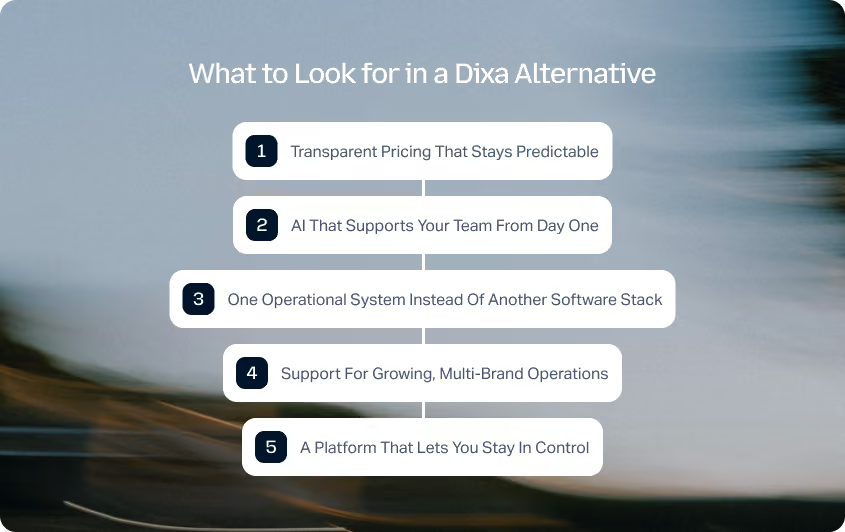
Transparent Pricing That Stays Predictable
Many support platforms advertise an attractive starting price, but costs can increase quickly as AI, analytics, workforce management, or additional channels are added. Look for pricing that's easy to understand and doesn't require multiple upgrades as your support operation grows.
AI That Supports Your Team From Day One
The most successful support teams aren't replacing agents overnight. They're introducing AI gradually, starting with low-risk capabilities like summarization, translation, sentiment analysis, classification, and AI-assisted replies before expanding into customer-facing automation. The right platform should support that journey rather than forcing you into an all-or-nothing approach.
One Operational System Instead of Another Software Stack
As businesses grow, disconnected tools create disconnected customer experiences. Voice, email, chat, knowledge management, reporting, and AI work best when they're part of the same operational system rather than separate products stitched together. That means less context switching for agents, reporting you can trust, and AI that has access to the full customer conversation.
Support for Growing, Multi-Brand Operations
If you manage multiple brands, regions, departments, or business units, it's worth checking how each platform handles separation. Some require multiple instances or contracts, while others allow you to manage everything from a single platform without sacrificing reporting or governance.
A Platform That Lets You Stay in Control
AI is changing customer support, but most organizations still want humans involved in the process. The best Dixa alternative should let you decide where AI helps, where people stay in control, and how quickly automation expands as confidence grows, not force you into a completely autonomous model before you're ready.
The Best Dixa Alternatives at a Glance
If you're shortlisting the best Dixa alternatives, this comparison table highlights the differences that matter most: pricing transparency, AI availability, omnichannel coverage, multi-brand support, and the types of support operations each platform is best suited to.
Pricing & feature disclaimer
Pricing, features, AI capabilities, integrations, and trial availability were verified from publicly available vendor information at the time of publication. Software platforms update their products frequently, so details may change after publication. We recommend confirming the latest pricing and feature availability with each vendor before making a purchasing decision.
Want to see why BlueTweak is our top recommendation? Book a personalized demo to see how one operational system combines omnichannel support, AI assist, workforce management, and analytics, without the complexity of managing multiple tools.
The 10 Best Dixa Alternatives in 2026
Every platform below takes a different approach to customer support. Some prioritize low entry costs, others focus on e-commerce or enterprise contact centers, while a growing number are investing heavily in AI.
The right choice depends on the challenges you're trying to solve. If you're moving away from Dixa because of pricing complexity, AI that's locked behind higher plans, or support workflows spread across multiple tools, you'll want to pay particular attention to how each platform handles AI, reporting, and operational simplicity.
Here's how the 10 best Dixa alternatives compare in more detail.
1. BlueTweak: Best for AI-Powered Support Without Pricing Surprises
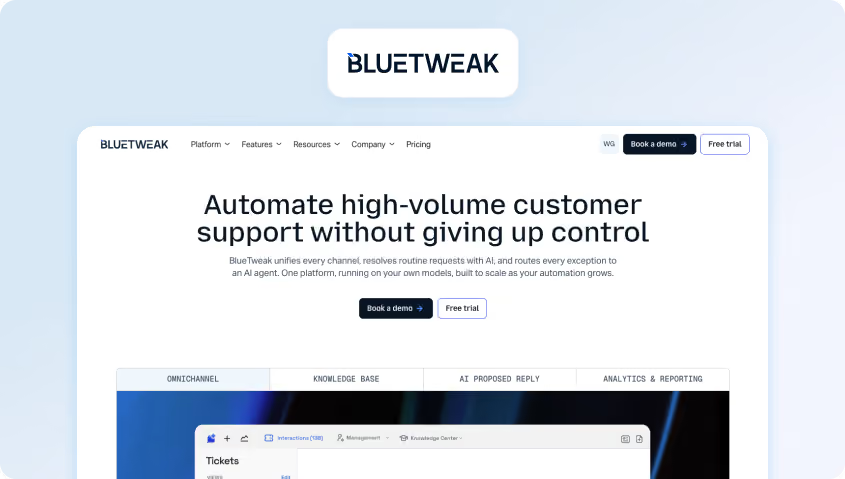
BlueTweak is a modern AI-powered customer support software platform built around a simple idea: your support team shouldn't have to buy separate products or expensive add-ons just to deliver excellent customer service. Rather than combining different tools for ticketing, voice, analytics, quality assurance, workforce management, and AI, BlueTweak brings everything together in one operational system.
That means your agents work from one platform, with one interaction timeline, one knowledge base, one reporting model, and one AI layer that shares complete customer context across every conversation. Whether customers contact you through email, live chat, voice, or social messaging, your team has everything they need on a single screen instead of switching between different tools.
Unlike many Dixa alternatives, BlueTweak includes a broad range of AI assist capabilities within its standard license. AI-powered email, chat, and voice summarization, translation, sentiment analysis, intelligent routing, classification, and knowledge base integration are all included, while conversational AI and AI-generated replies are charged separately on a simple usage basis. This gives businesses access to powerful AI without forcing them onto higher subscription tiers or charging an additional fee for core functionality.
Best For:
Support teams replacing modular help desks with one operational system.
Key Strength:
AI assist is included by default, with omnichannel support, intelligent routing, reporting, quality management, and multi-brand support all working together from a single platform. Rather than adding another AI tool, BlueTweak helps your team manage every conversation with full customer context across all support channels.
“Customer support teams don't need more AI tools, they need fewer operational barriers. Our goal is to bring conversations, knowledge, analytics, and AI together in one operational system, so every improvement builds on the last rather than adding more complexity. That's how organizations create better customer experiences while giving their teams the confidence to adopt AI at their own pace.” — Radu Dumitrescu, Head of Presales & Digital Transformation, BlueTweak
Pricing:
BlueTweak's standard license starts at €65 per agent/month and includes email, chat, voice, ticketing, multilingual support, a knowledge base, custom analytics, intelligent routing, sentiment analysis, AI-powered summarization, translation, and more as standard. Optional AI usage is billed separately only when it's used, including €0.20 per resolved AI chat session, €0.40 per AI-generated email thread, and €0.09 per minute for fully AI-resolved voice calls.
Wondering how much you could save by switching from Dixa? Try BlueTweak's free ROI Calculator to estimate your potential savings based on your current support operation, AI usage, and ticket volumes in just a few minutes.
Limitation:
While BlueTweak continues to expand its native integration library, some organizations with highly specialised technical requirements may want to confirm connector availability during the evaluation process.
BlueTweak in Action
BlueTweak has already demonstrated measurable results in complex, high-volume customer support environments. Global BPO provider Conectys implemented BlueTweak to consolidate customer interactions across multiple brands and support channels within a single operational system, bringing omnichannel communications, AI-powered assistance, workforce management, quality management, and analytics together on one platform.
The result was a 25% reduction in average resolution times, a 40% improvement in reporting efficiency, and a 35% increase in customer satisfaction (CSAT). By giving agents complete customer context from a single workspace instead of requiring them to switch between disconnected tools, BlueTweak helped streamline day-to-day operations while enabling faster, more consistent customer service at scale.
Why Switch From Dixa?
If you're frustrated by AI capabilities being locked behind higher plans, disconnected reporting, or managing multiple brands across separate tools, BlueTweak offers a simpler approach that keeps your entire support operation together in one platform.
Ready to see BlueTweak in action? Experience how one operational system can simplify customer support, improve agent productivity, and give your team complete control over AI adoption. Start your 14-day free trial today , no credit card required.
2. Zendesk: Best for the Largest Integration Ecosystem

Zendesk is one of the most established names in customer service software, making it a natural choice for organizations that prioritize flexibility and a large marketplace of integrations. Its platform combines ticket management, messaging, voice, help center functionality, and workflow automation, while giving businesses access to thousands of third-party apps.
This can be particularly appealing for organizations moving away from Dixa, whose integration marketplace is considerably smaller, with fewer than 100 publicly available integrations. Businesses with more complex technology stacks may benefit from the additional flexibility a larger ecosystem provides.
For many companies, that's also where complexity begins. As support operations grow, additional products for workforce management, quality assurance, advanced analytics, and AI can significantly increase the total cost of ownership. While Zendesk has invested heavily in AI, many advanced capabilities are tied to higher subscription tiers or paid add-ons, making it more difficult to predict long-term pricing.
Zendesk remains a capable option for businesses with complex technical requirements or existing investments in its ecosystem. However, organizations looking to replace Dixa because they want greater pricing transparency or fewer moving parts should carefully compare the overall platform costs rather than the advertised starting price.
Key Strength:
Extensive integrations, mature workflow automation, powerful ticketing system, and broad customization options for complex support environments.
Pricing:
Starts from approximately $19 per agent/month (billed annually), with advanced AI features and additional capabilities available on higher plans or as paid add-ons.
Limitation:
Costs can rise quickly as businesses add AI, workforce management, quality assurance, and other advanced functionality.
Why Switch From Dixa?
If your priority is access to one of the largest integration marketplaces available, Zendesk offers exceptional flexibility, but be prepared for AI features and platform costs to increase as your support operation grows.
3. Freshdesk: Best for Budget-Conscious Growing Teams
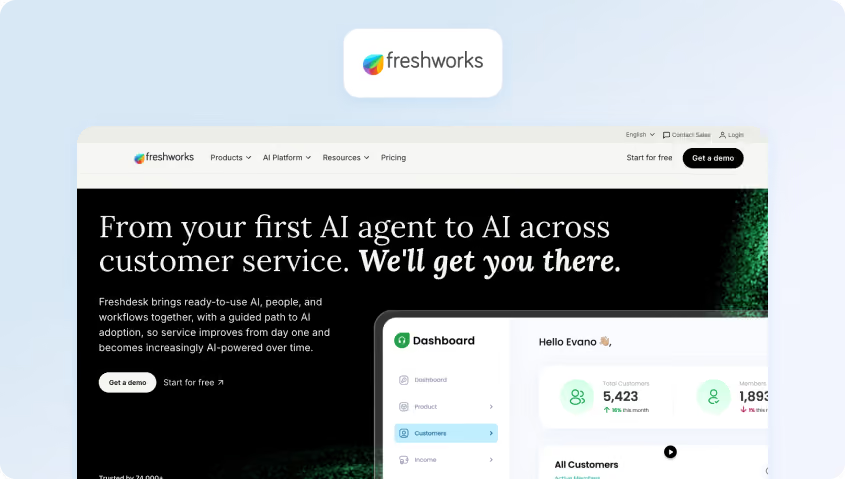
Freshdesk has long been one of the most popular Dixa alternatives thanks to its accessible pricing, generous free plan, and straightforward approach to customer support. It offers a solid mix of ticket management, live chat, automation, collaboration tools, and knowledge base functionality, making it particularly attractive for businesses moving away from email-based support.
As organizations grow, Freshdesk also offers AI-powered capabilities through Freddy AI, helping teams automate repetitive tasks, suggest responses, summarize conversations, and improve agent productivity. However, like many competitors, access to its more advanced AI capabilities depends on your subscription tier and selected add-ons.
Freshdesk works well for organizations that want dependable customer support software without the complexity or cost of enterprise contact center platforms. For teams managing increasing ticket volumes, it's an approachable option with a relatively gentle learning curve.
Key Strength:
Competitive entry pricing, intuitive interface, solid automation features, and a mature omnichannel platform that's easy for growing teams to adopt.
Pricing:
Paid plans start at approximately $15 per agent/month (billed annually). Advanced AI capabilities are available on higher plans and through Freddy AI add-ons.
Limitation:
Organizations with more complex reporting, AI, or multi-brand requirements may eventually outgrow the platform's lower pricing tiers.
Why Switch From Dixa?
If affordability is your main priority, Freshdesk delivers excellent value. However, it's worth comparing the long-term cost of AI features and premium functionality before making a final decision.
4. Kustomer: Best for Customer-Centric E-Commerce Support

Kustomer takes a different approach to traditional help desks by organizing every interaction around the customer rather than individual support tickets. Instead of switching between conversations, agents work from a unified customer timeline that combines communication history, order information, and other customer data into a single view.
This model works particularly well for e-commerce customer service, where agents often need immediate access to order data, previous conversations, and account history before responding. Kustomer also offers AI-powered capabilities through Kustomer IQ, which detects customer intent, improves self-service experiences, classifies conversations, suggests responses, and helps route enquiries to the right teams.
For e-commerce brands with high ticket volumes, Kustomer's customer-centric design can improve agent efficiency and reduce the time spent searching for information. That said, its pricing positions it above many competing help desk platforms, making it a stronger fit for organizations that can fully benefit from its data model.
Key Strength:
A customer timeline that brings together conversations, customer data, order history, automation, and AI-powered assistance in one workspace.
Pricing:
Kustomer does not publicly disclose pricing. Instead, businesses need to request a customized quote based on their requirements, support volume, channels, and configuration
Limitation:
The sales-led pricing model makes it harder for teams to estimate costs upfront compared with platforms that publish transparent pricing. Organizations should evaluate the full cost of ownership, including implementation, integrations, and any additional services required.
Why Switch From Dixa?
If your agents spend most of their day moving between customer profiles, order history, and support conversations, Kustomer's unified customer timeline may offer a more efficient way to manage ecommerce support.
5. HubSpot Service Hub: Best for Existing HubSpot Customers
HubSpot Service Hub is a natural choice for businesses already using HubSpot's CRM, Marketing Hub, or Sales Hub. Rather than operating as standalone customer support software, it extends the wider HubSpot ecosystem by connecting support conversations with customer records, sales activity, and marketing data. This gives agents more customer context and helps teams deliver a consistent experience across the entire customer journey.
The platform includes a shared inbox, ticketing system, knowledge base, live chat, customer feedback tools, and AI-powered features to improve agent productivity. Businesses can also automate common workflows, route conversations to the right team members, and track support performance through built-in reporting. However, many of the more advanced capabilities are reserved for Professional and Enterprise plans, making costs rise as support requirements become more sophisticated.
For organizations already invested in the HubSpot ecosystem, Service Hub can be an effective way to centralize customer support. Businesses evaluating Dixa alternatives without existing HubSpot infrastructure, however, should carefully consider whether they'll benefit enough from the broader platform to justify the investment.
Key Strength:
Tight integration with HubSpot CRM, giving agents complete customer context across sales, marketing, and support interactions.
Pricing:
Free plan available. Paid plans start from approximately $10 per seat/month, with advanced automation, reporting, and AI capabilities available on higher tiers.
Limitation:
Many advanced support features are reserved for higher-priced plans, and businesses not already using HubSpot may end up paying for functionality they don't need.
Why Switch From Dixa?
If your customer support team already relies on HubSpot CRM, Service Hub can create a more connected customer experience without introducing another standalone platform.
6. Gorgias: Best for Shopify-First E-Commerce Brands

Gorgias is purpose-built for e-commerce customer service, making it one of the strongest Dixa alternatives for online retailers that primarily sell through Shopify. Rather than focusing on traditional ticket management, Gorgias brings together customer conversations, order data, and ecommerce workflows into a single agent workspace, allowing support teams to respond more quickly and resolve common requests without switching between systems.
Deep Shopify integration enables agents to view customer purchases, update orders, process refunds, and manage subscriptions directly from support conversations. Gorgias also supports AI-powered automation, automated responses, intelligent routing, and social messaging across multiple support channels, helping ecommerce brands manage high ticket volumes more efficiently. Its pricing model is designed around support volume, with each plan including a set number of tickets and AI interactions before usage-based charges apply, making it important for growing businesses to forecast future support demand.
While Gorgias excels in ecommerce environments, its strongest capabilities are closely tied to Shopify and other ecommerce platforms. Businesses with more diverse support requirements or complex omnichannel operations may find broader customer service platforms offer greater flexibility.
Key Strength:
Native ecommerce workflows that connect support conversations with customer accounts and order data, helping agents resolve issues faster.
Pricing:
Gorgias offers five pricing tiers based on monthly support volume. Plans start at $40/month with their Starter plan. Enterprise pricing is available on request. Each plan includes a monthly allowance of support tickets and AI interactions, with additional usage billed separately once those limits are exceeded.
Limitation:
While Gorgias offers powerful e-commerce capabilities, costs can increase as ticket volumes and AI usage grow. Businesses with fluctuating support demand should consider how overage charges and automation usage may affect the total cost of ownership.
Why Switch From Dixa?
If your support operation revolves around Shopify, Gorgias' deep ecommerce capabilities and native order management may provide greater value than a more general-purpose customer support platform.
7. Intercom: Best for Product-Led Customer Support
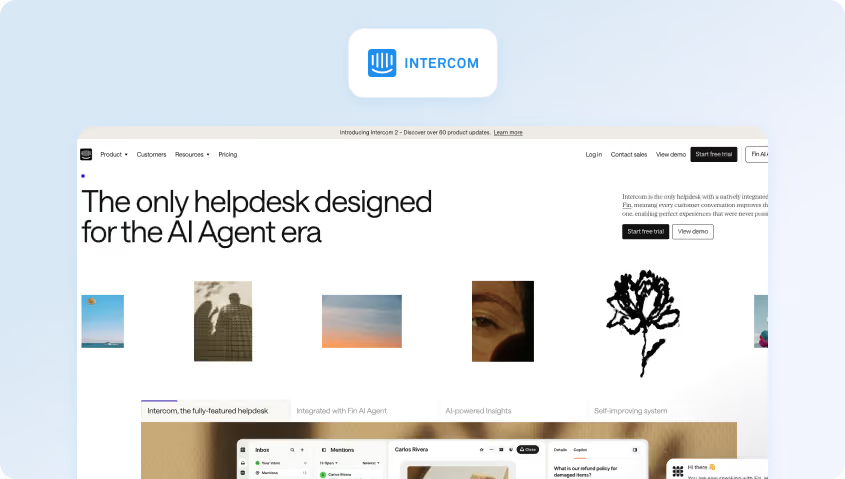
Intercom has evolved from a live chat platform into a comprehensive customer communications solution with a strong emphasis on AI and proactive customer engagement. Today, it combines messaging, help center functionality, AI-powered support, outbound communication, and workflow automation to help businesses manage customer conversations across multiple channels.
Its AI capabilities, including the Fin AI Agent, are among the most advanced on the market and can help automate routine customer queries while supporting human agents with suggested responses and knowledge retrieval. Intercom also performs particularly well for SaaS companies and product-led businesses that want to combine customer support with onboarding, product messaging, and user engagement.
However, as businesses add AI usage, advanced automation, and additional products, overall costs can become difficult to predict. Organizations evaluating best Dixa alternatives should compare not only subscription pricing but also ongoing AI and usage-based charges.
Key Strength:
Market-leading conversational AI combined with powerful customer messaging and engagement capabilities.
Pricing:
Intercom's customer support plans start from $29 per seat/month (Essential), with Fin AI Agent billed separately from $0.99 per successful resolution (outcome). Additional AI and support products are available as optional add-ons, while channels such as SMS, WhatsApp, and Phone are billed on a pay-as-you-go basis.
Limitation:
While Intercom offers some of the most advanced AI capabilities on the market, its layered pricing model can make overall costs difficult to forecast. Businesses should consider seat licences, AI outcomes, optional add-ons, and channel usage when estimating the total cost of ownership.
Why Switch From Dixa?
If your priority is AI-powered customer engagement rather than traditional help desk functionality, Intercom offers one of the most mature conversational platforms available.
8. LiveAgent: Best for Affordable Omnichannel Support
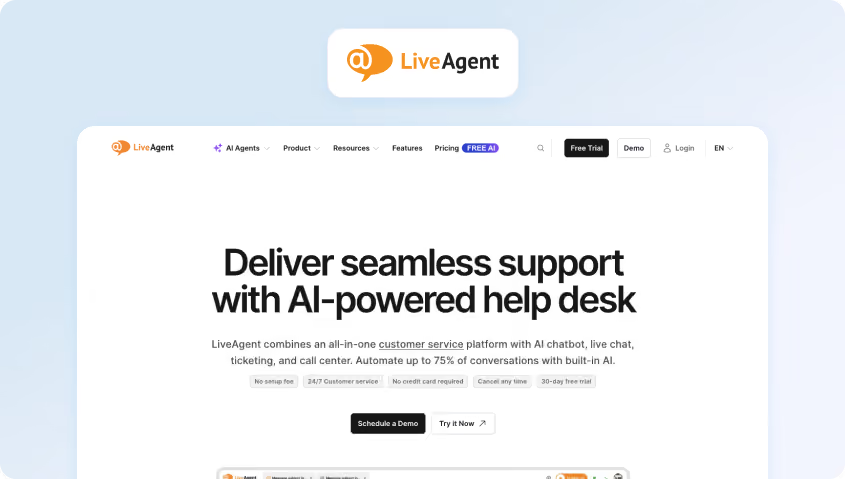
LiveAgent is a long-established customer support software platform that focuses on delivering broad functionality at an accessible price point. It combines email, live chat, voice, social messaging, ticket management, and a knowledge base into a single platform, making it an attractive choice for businesses looking to consolidate multiple support channels without investing in enterprise software.
The platform includes workflow automation, SLA management, reporting, canned responses, and collaboration tools that help support teams improve agent efficiency. LiveAgent also supports a large number of third-party integrations, allowing businesses to connect existing tools without extensive technical setup.
While LiveAgent delivers excellent value, its interface and overall user experience can feel less modern than some newer AI-first competitors. Organizations prioritizing advanced AI capabilities or deeper analytics may find other platforms offer stronger long-term scalability.
Key Strength:
Broad omnichannel coverage, AI Agents included across all plans, and a comprehensive feature set that delivers excellent value for growing support teams.
Pricing:
LiveAgent offers four paid plans, starting from $10 per agent/month for the Small Business plan, billed annually. All plans include AI Agents, with higher tiers adding features such as call center and IVR, advanced reporting, social media channels, SSO, and priority support.
Limitation:
While LiveAgent offers an impressive range of features for the price, its interface and reporting experience can feel less modern than some newer AI-first customer support platforms.
Why Switch From Dixa?
If your priority is reducing software costs while maintaining strong omnichannel support, LiveAgent offers one of the best value propositions in the market.
9. Help Scout: Best for Simple Shared Inbox Support
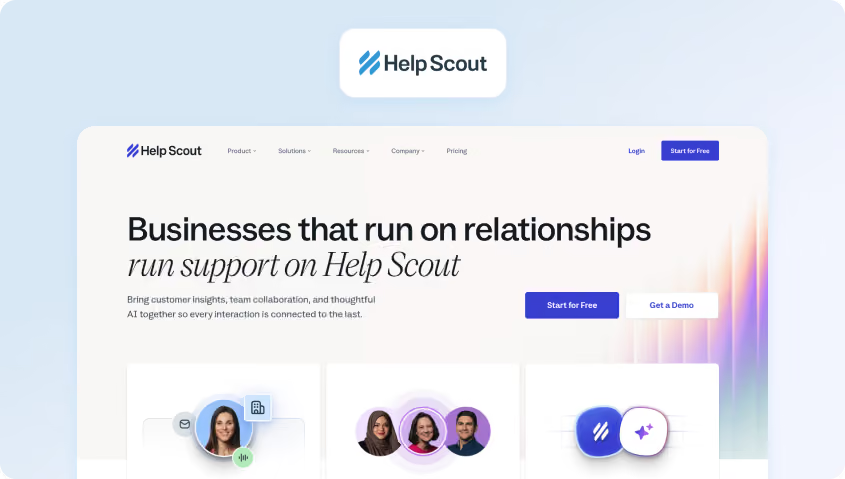
Help Scout takes a deliberately simple approach to customer support, making it a popular choice for smaller businesses that want an intuitive platform without unnecessary complexity. Instead of recreating the feel of a traditional ticketing system, Help Scout presents customer conversations through a familiar shared inbox that makes collaboration straightforward for growing support teams.
Alongside email support, the platform includes live chat, a knowledge base, reporting, customer satisfaction surveys, and AI-powered drafting and summarization features. Its clean interface makes onboarding quick, while built-in collaboration tools help teams manage support requests without extensive training or technical expertise.
Although Help Scout continues to expand its AI functionality, organizations requiring advanced workflow automation, voice support, or sophisticated omnichannel routing may eventually outgrow the platform.
Key Strength:
An intuitive shared inbox that makes customer conversations easy to manage and collaborate on.
Pricing:
Help Scout offers a limited Free plan for up to 5 users, while paid plans start from $25 per user/month for the Standard plan. AI Answers is available as an optional add-on, priced from $0.75 per successful resolution.
Limitation:
While Help Scout continues to expand its AI and omnichannel capabilities, voice support and some advanced automation, routing, and security features are reserved for higher-tier plans or optional add-ons.
Why Switch From Dixa?
If your team values simplicity over advanced customization, Help Scout offers a clean, easy-to-use alternative with minimal learning curve.
10. Genesys Cloud CX: Best for enterprise contact centers
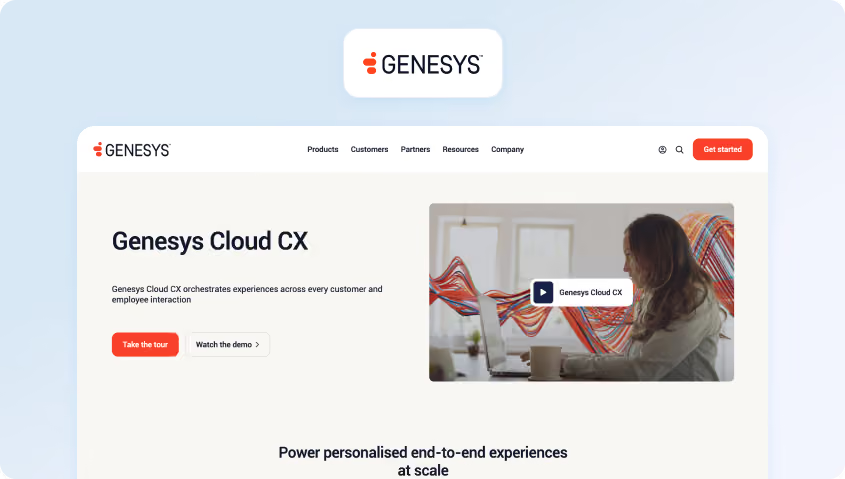
Genesys Cloud CX is one of the most comprehensive contact center platforms available, designed for organizations managing large-scale customer service operations across voice, digital channels, and self-service. It combines omnichannel routing, workforce engagement, quality management, AI-powered automation, analytics, and customer journey orchestration within a highly configurable enterprise platform.
Its AI capabilities include intelligent routing, predictive engagement, conversational AI, workforce optimization, and advanced analytics, making it well suited to organizations with complex operational requirements. However, that flexibility also brings greater implementation complexity and a steeper learning curve than many competing platforms.
For businesses comparing Dixa alternatives, Genesys Cloud CX is best suited to enterprise environments with dedicated technical resources and highly specialised contact center requirements, rather than growing support teams looking for a simpler customer support platform.
Key Strength:
Market-leading enterprise functionality spanning omnichannel routing, workforce engagement, AI-powered automation, workforce management, and customer journey orchestration, with licensing tiers that scale as operational requirements become more sophisticated.
Pricing:
Genesys Cloud CX offers four pricing tiers, starting from $75 per user/month for the Cloud CX 1 plan, billed annually. Higher tiers introduce additional digital channels, workforce engagement management (WEM), journey management, and increasingly advanced AI capabilities, including Agent Copilot, predictive routing, virtual agents, and Supervisor Copilot.
Limitation:
While Genesys Cloud CX offers one of the most comprehensive feature sets available, its breadth can make implementation and ongoing administration more complex than many other customer support software platforms. Many of its most advanced AI, workforce management, and journey orchestration capabilities are also reserved for the higher-priced licensing tiers.
Why Switch From Dixa?
If you're running a large enterprise contact center with complex routing, workforce management, and AI requirements, Genesys Cloud CX provides the depth and flexibility to support those operations.
Where BlueTweak Fits
Every customer support platform has strengths, and Dixa remains a solid choice for businesses looking to unify customer conversations across voice, email, chat, and social channels.
However, as support operations grow, many teams find themselves looking for a platform that offers greater pricing transparency, more flexibility around AI adoption, and the ability to manage increasingly complex operations without adding more tools. That's where BlueTweak stands apart.
Rather than treating AI as a premium feature reserved for higher subscription tiers, BlueTweak includes AI assist capabilities as part of its standard platform. Features such as intelligent routing, conversation summarization, sentiment analysis, translation in more than 100 languages, classification, and knowledge base integration are available from day one, allowing teams to improve agent productivity without continually upgrading their subscription or negotiating access to new functionality.
Just as importantly, BlueTweak doesn't expect organizations to hand customer support over to AI overnight. Instead, it gives businesses complete control over how AI is introduced into their operation. Many teams begin by using AI behind the scenes to summarize conversations, surface knowledge, translate messages, and support agents with suggested replies. As confidence grows, they can gradually expand automation into customer-facing interactions while maintaining human oversight where it's needed most.
The platform also removes much of the operational complexity that builds up as businesses scale. Instead of managing separate systems for ticketing, voice, workforce management, analytics, quality assurance, and AI, BlueTweak brings everything together in one operational system. Teams can manage multiple brands or departments within a single instance while keeping reporting, permissions, and customer data appropriately separated.
For organizations evaluating Dixa alternatives, that combination of transparent pricing, AI included by default, and operational simplicity makes BlueTweak a compelling choice for both today's support requirements and tomorrow's growth.
See what a simpler support operation looks like. Try BlueTweak free for 14 days and discover how built-in AI, omnichannel support, and one operational system can transform the way your team works.
BlueTweak vs. Dixa: Head-to-Head Comparison
If you're deciding between Dixa and BlueTweak, the biggest differences aren't in channel coverage, they're in how each platform approaches pricing, AI adoption, and operational scalability.
Why BlueTweak Comes Out Ahead
Both platforms help businesses deliver omnichannel customer support. The difference lies in how they scale.
BlueTweak is designed to remove operational friction as support teams grow. AI assist is available from the outset, pricing remains straightforward, and teams can introduce automation gradually instead of committing to an AI-first support model from day one. Combined with multi-brand support and a unified operational platform, it offers a simpler path for organizations looking to modernize customer support without increasing complexity.
Want to experience BlueTweak for yourself? Start a 14-day free trial and explore the platform with no credit card required.
Dixa Alternatives: Which Should You Choose?
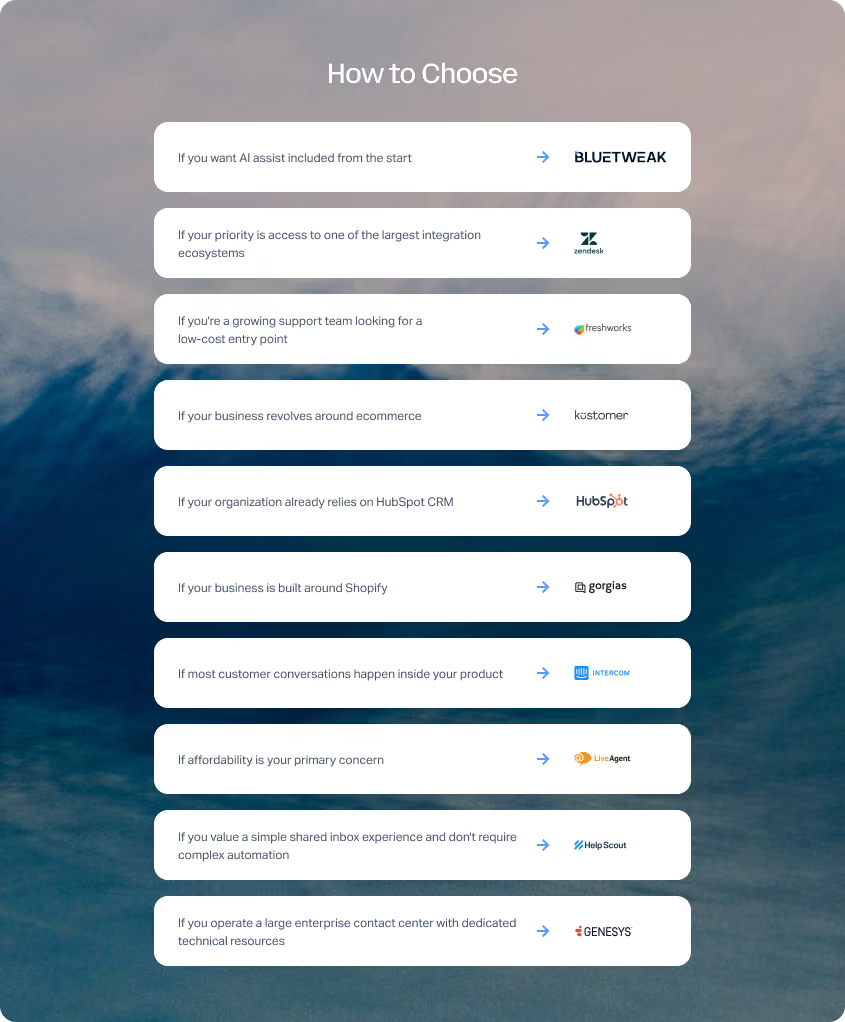
The right Dixa alternative depends on your support model, existing technology stack, and long-term goals.
- Choose BlueTweak if you want AI assist included from the start, need to manage multiple brands or departments, and prefer to introduce AI gradually within one operational system.
- Choose Zendesk if your priority is access to one of the largest integration ecosystems and you're comfortable paying for higher AI tiers and additional products.
- Choose Freshdesk if you're a growing support team looking for a low-cost entry point with solid omnichannel capabilities.
- Choose Kustomer if your business revolves around ecommerce and you want every customer conversation tied to a complete customer timeline.
- Choose HubSpot Service Hub if your organization already relies on HubSpot CRM and wants customer support managed within the same ecosystem.
- Choose Gorgias if your business is built around Shopify and your support workflows depend heavily on ecommerce integrations and order management.
- Choose Intercom if most customer conversations happen inside your product and AI-powered messaging is a higher priority than voice support.
- Choose LiveAgent if affordability is your primary concern and you want broad omnichannel functionality without enterprise pricing.
- Choose Help Scout if you value a simple shared inbox experience and don't require complex automation or voice capabilities.
- Choose Genesys Cloud CX if you operate a large enterprise contact center with dedicated technical resources and advanced workforce management requirements.
If you're looking for the best balance of transparent pricing, built-in AI, omnichannel support, and operational simplicity, BlueTweak is our top recommendation. It gives support teams the flexibility to adopt AI at their own pace, manage multiple brands from one platform, and deliver better customer experiences without layering on additional products or unnecessary complexity.
What Is the Best Dixa Alternative?
Dixa remains a capable customer support software platform, particularly for growing ecommerce businesses that want to unify customer conversations across multiple channels. However, as support operations become more complex, AI capabilities locked behind higher-tier plans, sales-led pricing, and an integration marketplace with fewer than 100 publicly available integrations can make it harder to scale efficiently.
If you're looking for a platform that includes AI assist from the outset, supports multiple brands or departments within a single operational system, and gives you complete control over how AI is introduced into your workflows, BlueTweak is our top recommendation. It combines omnichannel support, intelligent automation, workforce management, analytics, and quality management in one platform, helping support teams scale without adding unnecessary complexity.
See how BlueTweak compares in your own support environment. Book a personalized demo to explore how one operational system can simplify your workflows, reduce operational complexity, and help your team adopt AI with confidence.

As Head of Digital Transformation, Radu looks over multiple departments across the company, providing visibility over what happens in product, and what are the needs of customers. With more than 8 years in the Technology era, and part of BlueTweak since the beginning, Radu shifted from a developer (addressing end-customer needs) to a more business oriented role, to have an influence and touch base with people who use the actual technology.



